Showing posts with label Emma Thompson. Show all posts

Saturday, April 23, 2011

Cinematic Shakespeare, Part Two: The Ladies

I meant to post this yesterday, but alas - I was without internet (horrors). Well, today is the birthday of the Bard so moving on to the excellent women who have done brilliant things because of him.
    
Glenn Close as Queen Gertrude (Hamlet)
Coming off the one-two punch of Alex Fisher and Isabel de Merteuil, I suppose the idea of Close as Gertrude seems liked some outlandish casting from Zeffreli she still emerges as the finest characterisation of the Queen I’ve seen on film. It’s probably her theatrical roots coming to the surface. Gertrude, I suppose, emerges as one of the more ambiguous mothers from Shakespeare. Close manages to retain that ambiguity without making the character too sinister. At her best she manages to sustain that chemistry with Gibson while creating the same with Bates – without making Gertrude seem insincere.

Olivia Hussey as Juliet (Romeo & Juliet)
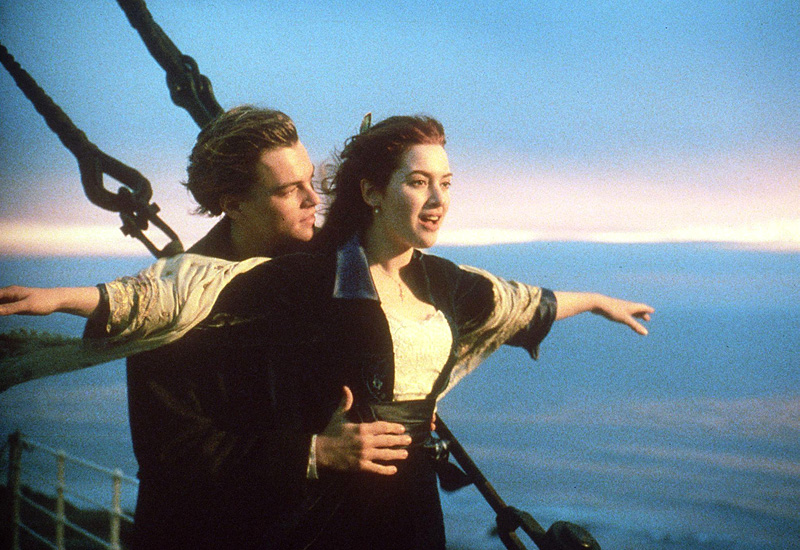
Olivia looks even younger than Leonardo, which makes her seem to even more of a wise choice for Juliet. As young as the characters are in the play, we often think of them as older and Olivia manages to juxtapose the generally adult desires of Juliet with the more fanciful, youthful portion. It’s an amalgamation that works, especially in the final moments of the film where she’s astounding. As with Whiting, it’s a real shame she never did something as special again.

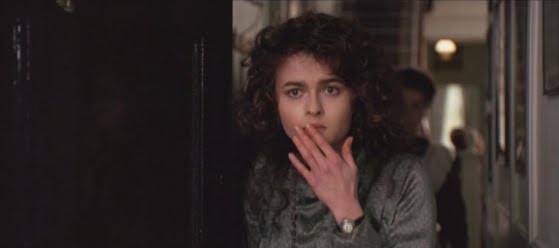
Helena Bonham Carter as Lady Olivia (Twelfth Night)
On the most obvious levels Helena doesn’t seem like the obvious fit for Olivia, but the entire film is sort of ironic adaptation of the entire film. It’s somewhere between Helen Schlegel and Kate Croy but not anywhere as domineering and she’s easily the best in show – even if she’s not the traditional heroine of the play. To call her comedic skills subtle would be an understatement and despite the more obvious incongruities that exist between her and the character it’s the unobtrusive comedic gifts she uses to define a character who’s not quite funny but is at the centre of comedy.

Elizabeth Taylor as Katherina (The Taming of the Shrew)
I said before, I always think of the Shrew when I hear about Elizabeth Taylor. True, it’s not her best performance but it’s such a fine example of her at her most tenacious – which is what I remember her most for, as an actor and a person. She’s beautiful and terrible and performs with an astounding comedic timing – it’s as if the role was written with her in mind.

Emma Thompson as Beatrice (Much Ado About Nothing)
It only makes sense that the finest female Shakespearean performance comes from a thoroughly British actor. I can’t think of any actor, of her generation, who so seems to so easily encapsulate the spirit of the Shakespearean era. Shakespeare, at its heart, is about its words and Emma Thompson wins easy points for her excellent enunciation. She’s just perfect here.

Later in the afternoon I'll have the closing with a special top 5.
                  
Which of these ladies impresses you most?

Wednesday, March 9, 2011

March Bloodstones: Helen and Margaret Schlegel in Howards End

The bloodstone is the stone of March, and March is women's history month. Hence this post, (first entry HERE).
                 
Jhabvala and Ivory don’t have the comfort of Forster’s lush narrative to wallow in, so they’re prevented from establishing – immediately – the radical ways of the Schlegel sisters, and yet from that very first visit Mr. Bast pays to their flats one is swayed to believe that there’s something peculiar about them. There’s already something eccentric in the on-and-off engagement between Helen and Paul and as Mr. Bast raps at the door – to retrieve his stolen umbrella – there’s something even odder about Margaret’s, “Not again, Helen. She is an incorrigible thief.” It’s not exactly courage, as yet, but it’s an essential bit about organic everything in Howards Ends unfolds – it’s never uncinematic but it always retains a definite literariness.
 
Helen seems like the more obvious candidate, but the quietness with which Margaret approaches her tentative relationship with Mrs. Wilcox seems decidedly gracious in its way. It’s the sort of selfless nobleness that we come to define her character by, and though it’s pointless to see the character through any sort of feministic lens it’s notable that both she and Helen define their bravery in relation to the men about them. But, I’m getting ahead of myself. Again I come to this quandary of defining courage, and like Deanie Loomis (but, perhaps, not so difficultly) finding overt acts of courage is rare. Yet, the fact that they’re so erudite and well-meaning, even in their middle-class naïveté. The Edwardian era isn’t as symbolic as repressed women as, say, the Victorian era but considering how the upper-class Mrs. Wilcox feels about women’s education I can’t help but feel some commendation is worthy of them – although Aunt Jules’ aside “…but their father was German, and that is why they care for literature and art” seems (like everything about her character) superfluous and ridiculous.
Because it’s the moment where the two storylines finally interact, the wedding emerges as that obvious moment for watching different types of “courage”. Taking Forster and putting him to screen seems to be such a dubious task, and I have added admiration that Helena Bonham Carter manages to toe that line between histrionic and passionate so finely. The same goes for Thompson, in opposite form; even when Margaret is at her most dubious it’s difficult not to identify with her. True, her knee-jerk embarrassment to Helen’s theatrics seems to subvert any significant act of courage and if you’re sinister and think that if, perhaps, Helen’s pleas for equality (for the Basts) is driven by romantic inclinations then it does the same. Still, as much as the narrative (and in lieu, the film) have that utilitarian function of showing us a “new” England the nice thing about Howards End is how complex the characters.
I hate to think of it as some sort of misguided penance, but it’s to Helen’s credit that she bears her pregnancy alone – even if there’s something vaguely repressive about her intended plan to spend the duration of her pregnancy. For all her excitability, Helen is defined by childishness where Margaret – as the older one – emerges as, arguably, the braver of the two. Emma is a powerhouse opposite Antony towards the end as she prepares to leave him, and it’d be an injustice to her (Forster, Jhabvala, Ivory and the film) to see her reneging of that decision as evidence of her lack of courage. It’s the very thing that defines Margaret, her gentle grace in spite of the obvious and there’s that looming sense of justice as the camera pans over to Helen and her child and Margaret and Henry walking the plains. Howards End is not a women’s novel (thematically, or audience wise) but Forster’s characters and the interpretations of Thompson and Bonham Carter are fine evidence of courageous women – their excessive chatter is confirmation.
                       
As Mr. Bast says, “The more a lady has to say, the better. Ladies brighten every conversation.”

Tuesday, August 24, 2010

“We’re not odd, just over expressive”

“There is something peaceful and quiet about Howards End, starting with Vanessa’s haunting walk and introduction. To me, it feels like the essence of the British countryside, of elegance and that high class feeling that Brits always put in their period films. Howards End is, to me, James Ivory’s greatest achievement, such a delicate film, but with such power of acting and fascinating plot.”
Alex (of Alex in Movieland and My Last Oscar Flick) always manages to make each of his words count and his summation of Howards End is fittingly perceptive.
Like him, I think of Howards End as the best work from the Merchant Ivory team, and like him I think of its beginning with Vanessa Redgrave soon after I hear the name. Howards End opens with a picturesque image of a woman walking through a green field near the eponymous Howards End. She, too, is clad in green, and though we don’t know it as yet this woman is the patron saint of Howards End (the film and the place). And though it opens with that image of Miss Redgrave, the story begins just after. An engagement impulsively arises and is broken just as swiftly. A bumbling aunt makes her way to a far off cottage, mistaken identities arise and harsh words ensue – and all this within the first ten minutes only. Yet, remove this preamble and Howards End is no worse (or admittedly, no better) for it. Even though I was drawn to Howards End on first viewing, it took a few more for me to appreciate the importance of this prologue and a few more for me to fully grasp the significance of Redgrave’s sombre walk through the field. And yet, the film isn’t really about Mrs. Wilcox. Like Forster’s original novel, it’s a story of class division in early 20th century England. There are the middle class Schlegels – booklovers and idealistically (if pedantically) good, the upper-class Wilcoxes – sometimes brittle and unrelenting but more than just caricatures and the lower class Basts – there are only two, but they’re just as important. Howards End takes a look at the unlikely clash between these three different groups, and though it’s not a particularly subtle message (Forster’s novel is almost a complete allegory) it’s a pertinent one.
            
The name Merchant Ivory was in the nineties (and remains, but with less alacrity) a name indicative of good literary adaptations. Howards End easily exists as my favourite. Screenwriter Ruth Prawer Jhabvala seems incredibly at ease adapting Forster to the screen, so that the machinations of these very “literary” characters never come across as unnatural. She does the same with A Room With A View, another Forster novel, but this is in a class of its own. It’s interesting to note how much of Forster’s book (and actual lines) make it into Jhabvala finished script. The lines are as precise as few period pieces and sets up the chance for the actors to floor us with their deliveries, and they do – they really do. When Jose from the wildly insightful (but yet oddly hip) Movies Kick Ass sent in his blurb I wondered “why review it?”…he essentially summed up what I loved about it….
  
“It’s impossible to watch this movie and avoid being haunted by the image of Vanessa Redgrave walking along a vast path of grass. The ethereal nature of this scene sets a strange mood over a film that so unsentimentally examines the clash of social classes and the creation of what was supposed to become modern England. Emma Thompson and Helena Bonham Carter (both subtly extraordinary) play sisters who come to represent different schools of thought at the beginning of the twentieth century. Anthony Hopkins and Samuel West are their male counterparts who also become symbols for the underlying themes E.M. Forster addressed in his brilliant novel. The miracle in the movie though is watching these symbols become human and witnessing how the film works as a wonderful political study and as an involving, intense emotional drama. Few movies master with such ease the dichotomy that exists between mind and heart; which can be fierce enemies or intimate friends.”
It’s the penultimate line above that jolts me in particular. In transferring a novel so rich in symbolism to the screen Ivory and company manage to avoid one of the unnerving possibilities – caricatures. Instead of the characters becoming symbols, the symbols turn into characters (it seems synonymous, but mull it over – it’s not)
Emma Thompson’s Oscar win for Howards End remains as one of the most obviously good decisions the Academy has made in the Best Actress category. Her performance never fails to impress me upon subsequent viewings, even though to some degree it lies less in Thompson’s acting abilities (which are assuredly excellent) but in her ability to put the audience at ease. She’s only the de facto lead of the film (the main quarter are all given equal time for the most part) but it’s imperative for us to find Thompson’s Margaret to be a trustworthy, if simple, woman. Listening to Thompson recite her lines (and really, she doesn’t recite lines as much as she lives them) there is not the slightest trait of self-consciousness. Emma is so thoroughly Margaret we immediately believe her devotion to Helen – “what do I care Aunt Jules, Helen is in love – that’s all I need to know”. It’s one of her first lines and though it’s the beginning we already know all we need to about this woman.
         
Consider the words of Luke of Journalistic Skepticism (don’t let the name fool you, he’s much to opleasant to be a cynic):
“Battling through the myth that Merchant Ivory films are overlong and overwrought, Howards End combines the immense talents of its cast, particularly the always-lovely Emma Thompson and the startlingly beautiful Helena Bonham Carter, with an impossibly elegant backdrop. It’s a gorgeous costume drama that never looks down on its audience, and Thompson’s performance is mannered loveliness.”
It’s a period piece, but that doesn’t make it any less “real”. Howards End is intent to presenting as precisely normal a world as possible and Emma manages to find nuances in even those most rote of lines and adds a dash of personality in the places we’d least expect. For example, I love a slight moment where Redgrave’s Mrs. Wilcox instructs her to write her name on the top of the woman’s Christmas list – Emma’s gleeful obedience is amusing and completely in keeping with her character. This is the sort of woman who grows up before her time, but still retains a bit of the silliness – willing to be pleased at being at the top of someone’s Christmas list.
          It sets her in perfection opposition (I use the word loosely) to her sister, played excellently by Helena Bonham Carter – the Oscar snub heard around the world (so says me). Helen is just slightly more perverse than her sister, retaining a childish streak of meanness that can show itself at the most inopportune of moments, even when the lines don’t show it. A young lady looking for her husband at their home is given the tart response, “you’re welcome to search for him if you like” – added to Helena’s deadpan delivery and just the slightest trace of a smile playing on her lips makes it impossible for us to dislike her even as she adopts an almost ridiculous sense of pragmatism as the film reaches its close. It’s a fine line she treads, and in the same way that Emma avoids turning Margaret into someone we cannot love even as she does things we don’t care for, we still believe in Helena’s Helen even when we want to slap her. Perhaps more so. Her task is just as difficult as Emma – are people so devoted to the cause? Helena makes it plausible.
It took me years to finally appreciate Anthony Hopkins, whom I now realise plays his role so excellently I subconsciously feel he’s giving a bad performance. True, it’s nowhere near as good as his next alliance with Merchant Ivory, but he’s so subtle (blink and you’ll miss some of his expressions) I eventually realise he’s doing an excellent job. It’s not that the men are put on the backburner in Howards End. In fact James Wilby and Samuel West play pivotal roles reaching to the core of their characters. West particularly is taxed with an almost unplayable and idealistic character (for some reason he reminds me of Lovborg in Hedda Gabler). But West is so willing to trudge on through the righteousness – that is not self-righteous – I believe him even at his most dubious. Simple acts like refusing a substantial amount of money is more than just a pretentious act of gallantry, but a requisite to the character he’s carved and for someone who’s had her fair share of chivalrous leading men it’s no mean feat when I say that Helena has never seemed more at ease with a leading man. The scenes between the two bring a romanticism to the narrative that’s fittingly contrasted with the adulterous undertones and its firm opposition to the Anthony / Emma pairing.
Perhaps because it’s such a tribute to its trade Howards End makes me write like I’m still in high school , but it’s obvious nonetheless that it is one that I love so.
Howards End is the second masterpiece from the Merchant-Ivory team (E/N masterpiece #1, masterpiece #3], working at the height of their creativity. Anyone expecting the dreamy romanticism of their first masterpiece, A Room With A View, may be surprised at the complexity, subtlety and maturity of this drama. The luminous Emma Thompson, passionate Helena Bonham-Carter, and powerhouse Anthony Hopkins headline this tale of a country house, its meaning in the lives of its inhabitants, and its role in a series of misunderstandings that bring belated contentment to some, and ruin to others.

Gorgeous to look at, a dream to listen to, top-notch in all departments, this is intelligent film making at its best. Compelling and entertaining, it faithfully paints a tapestry of Forster's themes of love, class, family tradition, infidelity, and the yearning of artistic fulfillment. Vanessa Redgrave's supporting turn is but one of the film's many outstanding performances. I am also haunted by the symbolic image of a poor hanger-on literally crushed by his literary hopes and dreams. Howards End would sit proudly at the top of anyone's list of favorite films.”
So says Tom of the delightfully diverse Reinvention: The Journal of a Dog Lover...
It’s practically perfect in every way and so delicately made, it’s a pity many don’t even remember it. It’s #2 on my list of favourites, and really it’s interchangeable with the one to come since they’re both flawless, or thereabouts. (So, some of you would have discerned my obvious top choice.)
           
Do you care for Merchant Ivory? Do you care for Howards End? Speak up.

Friday, August 6, 2010

Movie Meme, Day 6: A Movie That Always Makes Me Cry

The first film that came to my mind which possibly gives it away to some of you, but there it goes (and no if you guess I’m not telling you; yet). I didn’t want to post about it just yet though. So I racked my brains…lies actually, three other films jump out at me. What makes us tearful? Death does, departure does, and inertia does. It makes me lose some significant “cool” points but I shed a tear for each.
    
The Hours (REVIEWED) – for the inertia
I understand that we only get a day in the lives of each character, and only so much can happen in a day, but it’s depressing how even though so much seems to happen nothing really changes. Or instead, it’s strange how the more things change, the more…they don’t. Clarissa probably moves the furthest, but even that is volatile. Laura Brown’s life has been wrought with regrets; Richard’s life was (for him) a disaster, and Virginia Woolf’s life is enough of an exercise in ennui and sadness that even the world’s biggest cynic could be moved.

The Remains of the Day (REVIEWED) – for the departure
The Remains of the Day, ironically being the last of the successful films from Merchant Ivory, has an ending so bleak it can’t NOT make me just a little teary eyed. Stevens reunion with the former head-maid should be more momentous, she knows it. He’s too set in his ways to reciprocate, too set in his ways to be anything but to stoic (albeit polite) man he was raised as. When Emma Thompson tearfully waves goodbye to him…who can blame her?
         
West Side Story (REVIEWED) – for the death(s)

I can never hear Bernstein / Sondheim’s “Somewhere” with getting depressed (but I’m a masochist, so I keep on listening). I’ll keep on saying that I think Richard Beymer is remarkable in West Side Story, as is Natalie Wood (of course). It makes me sadder than Romeo & Juliet because at least they were down with their deaths (well, a little). I don’t know, maybe it’s the fact that he dies with a song, or maybe it’s Natalie’s rant afterwards (what a monologue!). Whatever it is, it makes me want to cry. Yes indeed, yes indeed. (and they killed Russ Tamblyn? Who the hell does that?)
          
How weird am I? Would you cry at any of these? 
          

And yes, this is courtesy of the glorious MEME. I'm loving it so far...

Friday, July 9, 2010

Ranking the Potter Adults

I've still got Harry Potter on my mind (I'm in the process of rereading the last book for the umpteenth time). I'm going to miss these films when they're gone, even though they often get me riled up with their faults, but I digress. One of the things I love most about the Harry Potter films is their tendency to have excellent Brit actors popping up to make my day. I love the British, what can I say? Herein lay my favourite adult performances; and by adults I mean anyone who never donned a Hogwarts Students' Robe.
        
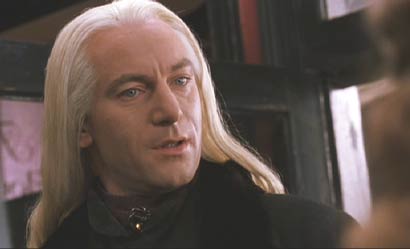
#15: Jason Isaacs as Lucius Malfoy
"Good" looking but still ugly, charming but repulsive and with that horrid hairdo he was good in the role. It's easy to forget him with all the great adults popping in and out, but he deserves some notices.
    
#14: Timothy Spall as Peter Pettigrew
This probably comes easy to him, but that doesn't make it any less good or enjoyable. His face alone annoys me (that's actually a compliment).
              
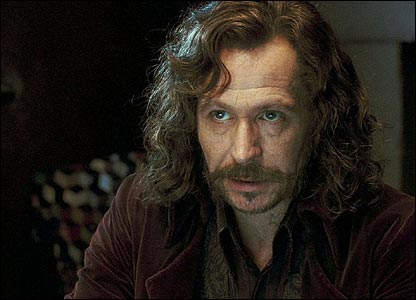
#13:Gary Oldman as Sirius Black
I tend to forget him quite often, which is wrong because he is good as Black. I like him best in the third installment and it is a shame we won't see him again.
                 
#12: Kenneth Branagh as Gilderoy Lockhart
It's weird how you could play the "Six Degrees" game with the actors in this movie, two of Branagh's love interest appear down below - but I digress. He plays with all the comedic glory it deserves and yet doesn't annoy us as much as this egotistical prick should. Good stuff.
                  
#11: Julie Walters as Molly Weasley
Often, unfairly, ignored because she's never front and centre. Oh, but her personability is priceless. She gets the characterisation down pat (everything Rowling intends) and is just too sincere for words. I really hope we get to see her kill Bellatrix (though of my loyalties are divided, this is HBC).
                              
#10: Ralph Fiennes as Lord Voldermort
Well I have a longstanding appreciation for this man's talent, and then he comes along and plays Lord Voldermort...how exactly does one resist that? Cold, frightening, charismatic and just downright nasty. I love it.
               
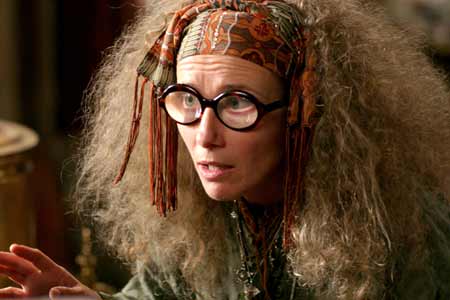
#9: Emma Thompson as Professor Sybil Trelawney
This was such a weird experience, seeing the always composed Thompson (Branagh's ex) as a bumbling teacher? Who knew she had such excellent comedic timing? There's a moment where she's being thrown out of the castle in the fifth installment that I always remember fondly. 
                  
#8: Alan Rickman as Professor Severus Snape
I hate that he gets typecast but I love when he gets typecast. He just knows to find that sinister root that makes him formidable and yet strangely charismatic. The hair doesn't do much for him, but I suppose he doesn't care.
       
#7: Miranda Richardson as Rita Skeeter
Oh how I wish she had more to do, every moment she appears on screen I can't look at anyone BUT her. She's just too enthralling for her own good and though we know she's wicked throughout we too are almost charmed into wanting her to intereview us.
             
#6: Maggie Smith as Professor Minerva McGonagall
She does it in her sleep, but she does it well. This is another performer I hope gets her chance to shine in the final installments, it's another example of casting genius. Shrewd, kind, but with an iron grip on her house.
             
#5: Richard Harris as Professor Albus Dumbledore I
Despite what it seems he's the perfect representative of Dumbledore as far as the books go. Old and wise with a talent for non sequiters, but with power behind those seemingly benign looks of his.
       
#4: Helena Bonham Carter as Bellatrix Lestrange
Nepotism? You bet your ass. This is Branagh's second ex on the list (that we know of). Perfection is an ideal but this is just divine. Manic but arresting, disarming (in more ways than one) and with a penchant for fickle childishness that just thrills me. Sometimes I think the Deather Eaters are calling...
             
#3: Jim Broadbent as Professor Horace Slughorn
You're never prepared for the emotion he brings to the role, thus his final appears always surprises you and then it saddens. He has excellent comedic timing, but it's the emotion that turns him into one of Harry's best teachers.
                     
#2: Imelda Staunton as Dolores Umbridge
...and it only gets better. This could have been one giant cliche (an evil person in pink, wow) but she is so good at showing the layers that she turns into the must offensively evil person on the series, thus far. Her unnverving smile, and that peppy walk. Only goes to show why you shouldn't trust "happy" folks.
                         
#1: Michael Gambon as Professor Albus Dumbledore II
Ironically, I think he's wrong the part. Too harsh when Dumbledore should be less overt, too loud when he should temper, and yet he finds himself in The Half Blood Prince and turns this character into something else - not Rowling's creation, but his own. That image of his pseudo-Moses moves in the caves and the drinking of the potion stay with me. Just excellent.
                                          
Great Adults That Could Have Been: Kristin Scott Thomas as Narcissa Malfoy. Imagine that.
          
Okay, now the fun part, with the exception of Oldman these people all have history:
Richard Harris is deceased so he goes first. Incidentally, he starred in Mack the Knife (1989) with Julie Walters who went on to star in Becoming Jane (2007) with Maggie Smith who had starred in Gosford Park (2001) with Michael Gambon who was in Sleepy Hollow (1999) with Miranda Richardson who was in Enchanted April (1992) with Jim Broadbent who was in Vera Drake (2004) with Imelda Staunton who was in Nanny McPhee (2005) with Emma Thompson who was in Sense & Sensibility (1995) with Alan Rickman who starred in Sweeney Todd (2007) with Timothy Spall who was in Hamlet with (1996) Kenneth Branagh who had starred with HBC in Twelfth Night ( 1995) who had starred with Ralph Fiennes Wallace and Gromit: The Curse of the Were Rabbit (2005) and who was in The End of the Affair with Jason Isaacs (1999)
                
...and of course the pairings continue like HBC and Emma in Howards End or Emma and Maggie and Ralph in Nanny McPhee & the Big Bang or Maggie and HBC in A Room With A View or HBC and Michael Gambon in The Wings of the Dove or Rickman and Thompson and Imelda Staunton in Sense & Sensibility.
                  
Do you think they'd chat on set? I did this from memory, maybe there is a movie with Oldman and one of them...anyone?
               
Take your pick. Which adult tops your list?

Saturday, May 8, 2010

Nanny McPhee & the Big Bang

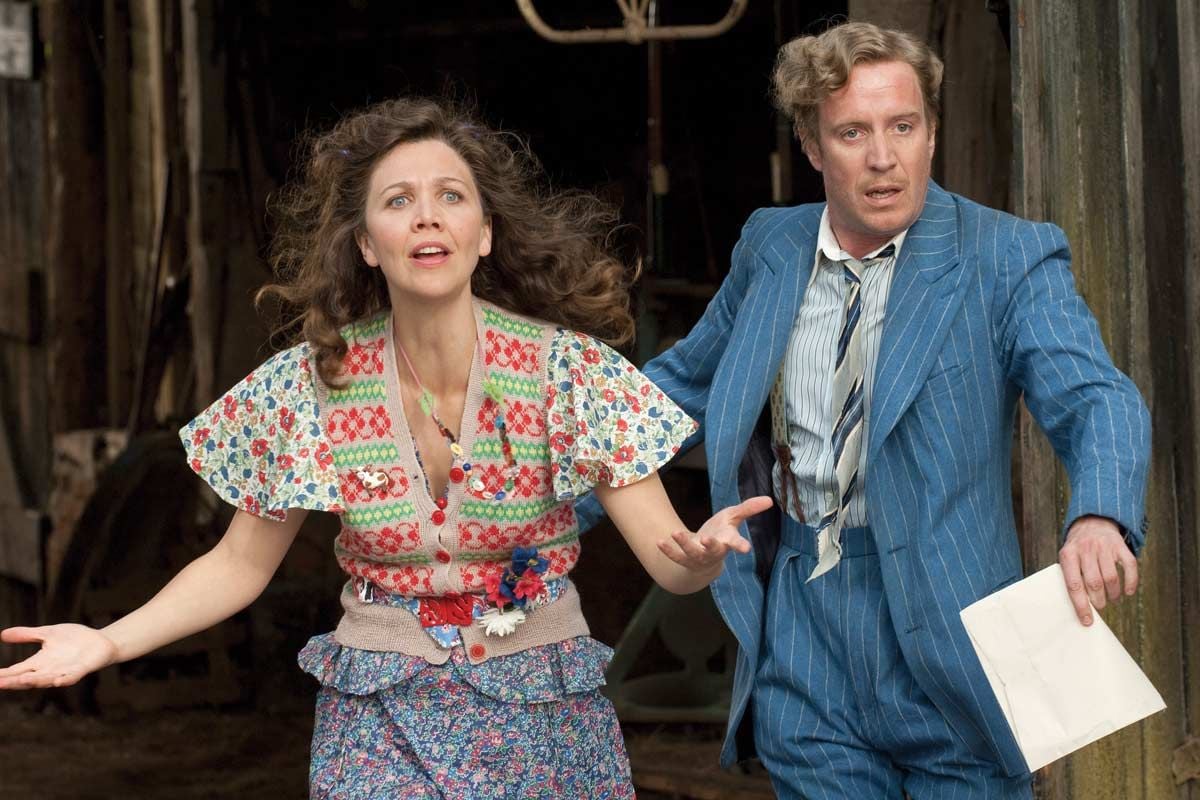
“Sequel-itis" is not something uncommon in the film industry. A successful film, often when it’s a genre flick, is rarely safe from spawning – a usually inferior – sequel. In the wake of this trend Emma Thompson penned a sequel to her success from 2005, Nanny McPhee. There’s nothing significantly unusual about Nanny McPhee. We know that she will arrive to a lot of misbehaved, but inherently good, children; we know she will change them for the better and we know that when her task is complete she will leave. Yet, Nanny McPhee & the Big Bang does not suffer from being a slipshod reincarnation of its original. Inasmuch as we’re willing to watch Superheroes conquer villain after villain, Nanny McPhee succeeds in the same way. And, it is in this realm that this manifestation of the tale exists as one superior to its predecessor.
The story centres on Isabel Green, a young Englishwoman with three children tending to her husband’s farm as he fights at war. Her niece and nephew’s arrival (ostensibly, for safety purpose) casts the already troubled household into chaos. All this ensues, whilst her wily brother-in-law hopes to gain the property for some nefarious reasons. It in this state that Nanny McPhee magically appears (although her appearance will be explained as we continue), and in her usual way delivers caustic, concise but nonetheless thoughtful words. The usual machinations occur, all leading to an imminent pleasurable ending for the good. But (and this is a big “but”) Nanny McPhee is not a cliché and is rooted in more than the pedestrian.
It does not function as a “prestige” flick in the normal sense of the word, but Nanny McPhee boasts credible performances from its cast. Like its thematic predecessors (Mary Poppins, The Sound of Music) it depends significantly on its young cast, who do the script justice. The five actors, particularly the two older boys give good performances particularly Asa Butterfield who avoids the easiest of stereotypes emerging as a somewhat more composed version of Freddie Highmore (and I like Freddie Highmore). However, it is Maggie Gyllenhaal as the beleaguered mother who sets the tone for much of the film. With eons more charisma than her Oscar nominated work in Crazy Heart Gyllenhaal delivers an excellent performance. It is easily the warmest she’s been onscreen and she uses her particularly expressive eyes to her benefit.
       
I would presume under the watchful eyes of Thompson’s excellently played McPhee Gyllenhaal realises the charm to be found in the story, most of which can be traced back to its screenplay and Thompson’s adroit skill for being whimsical. Things like an incidental (but still oddly profound) final word from Maggie Smith in a cameo-esque bit of fun, or the slight ways in which Nanny McPhee sagely recounts the “lessons” we’ve learned thus far. Nanny McPhee identifies as something of a fairytale, but still not something that’s only a figment of our imagination. It is not primarily a film that depends on messages, even though the third act falters slightly in trying to teach us too much, but its style is enchanting and message to parents is not difficult to unearth (like Ralph Fiennes workaholic dad in a delicious cameo). I am uncertain what the faith of Nanny McPhee & the Big Bang will be when it opens later in the Summer in the US. I fear, that something so fanciful may be forgotten amidst all the visceral thrills to be had later in the season. But, Nanny McPhee is made with care and delivered with spirit. It is not necessarily a story for children, but it is a story for the child in us all.
  
B

Thursday, April 29, 2010

"To Be Or Not To Be…"

...A Shakespeare Lover.
         
Why are people so fond of adapting Shakespeare to screen? I do feel he’s arguably the greatest writer so I have no issues with it, but it’s really interesting how he’s adapted and then re-adapted and then adapted again, just for good measure. The man sure has left behind a legacy. Two films I’m anticipating this year are Shakespeare adaptations. The first is Julie Taymor’s The Tempest. I like, but don’t love, The Tempest and I’m not too enamoured with Taymor’s decision to change the sex of Prospero (even if the lovely Helen Mirren has been given the reins). The second is an updated version of Coriolanus, a play I’ve never read (but I’ve never been overly fond of his histories). But with Vanessa Redgrave and Ralph Fiennes, I don’t see how I can say no.
            
I can’t say which adaptations of Shakespeare’s work are my favourites, although this list does pretend to be about that. But five incarnations come to mind immediately when I think of Shakespeare on film.
      
Hamlet (1948)
Olivier’s Hamlet has its issues, a number of them actually, but I’m always willing to forgive them – like Jean Simmons’ simpering Ophelia, Olivier’s obvious oldness, Herlie’s obvious youth – because it all comes together well. The film depends so much on the foreboding atmosphere, and with the black and white and the misty screen it’s so reclusively tense we can’t help but spiral down with Hamlet as he takes his journey. I guess, it did deserve it’s Best Picture win.
  
Much Ado About Nothing (1992)
Branagh and Emma Thomson sizzle on screen as Beatrice and Benedick, and though this too has its faults (Keanu Reeves, ugh) it’s all done well. I’m actually not a big fan of the actual play, but unlike many pieces it translates excellently to screen. I guess reading it can never compare to seeing it acted and Much Ado About Nothing doesn’t shirk on the joy of it all. It boasts one of Emma's most delightful performance, it's a pity it's become forgotten...
            
Twelfth Night (1996)
...forgotten like this, another Branagh piece. I always remember the lovely Helena Bonham Carter with affection in this. Twelfth Night is my favourite Shakespeare play (an odd choice, I know), it’s perhaps my favourite play – period. There’s just something irresistible about the nuanced nature of the characters and the ridiculous machinations of the characters as subplot after subplot develops leading to perfectly delight conclusion. Imelda Staunton and Ben Kingsley too are worthy of remembrance. I can’t say why Branagh’s film has become so forgotten…
       
The Taming of the Shrew (1967) (my review)
This film actually makes an appearance in my top 100, but has anyone seen it? This is Richard Burton and Elizabeth Taylor with the most chemistry between them. It’s sheer joy to watch them play excellently off each other in this farce piece. It may probably be a bit too irreverent for Shakespeare worshipers, but I’m sure that he would have enjoyed it for the sheer fervour with which they attack the lines.
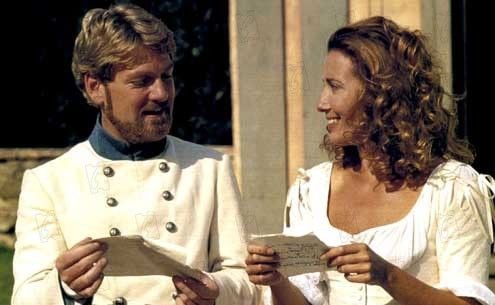
           
Romeo & Juliet (1968 (my review
This is actually quite a simple choice. As I mentioned in my review of it, it’s close to perfection. Leonardo Whiting and Olivia Hussey are astounding as the eponymous characters and the ensemble cast backs them up well. It’s not at all maudlin and just as excellent as the original. I’m uncertain if any Shakespeare incarnation could ever top this?
            
What do you think? Is Zeffirelli’s take on the greatest love story a paragon of its genre as I believe, or do you have another favourite?

Wednesday, April 28, 2010

20 Word Film Blog-a-thon

Owing to The Kid, I've got to now tell you why I love the cinema...but in 20 words. Yikes! So, here goes....clicking on the links would probably clear up any confusion....
            

Why DO I Love the Cinema?

Katey, Marty, George.
Rebels: Old and New
Merchant Ivory Schlegel Sisters
Musicalscomedies Woody to Judy.
Ingénues and veterans
...Love & War
             
No it's not a coherent paragraph, God knows, I couldn't manage that in twenty words...by order of The Kid - get bloggin'!

Thursday, April 15, 2010

British Birthday

I'm not back in full yet, but I had the fortune to come on line this morning to this post from Nick Davis informing me that today was the birthday of one of the most brilliant actresses alive - Emma Thompson. In typical intellectual fashion he wrote  a piece on this lovely lady, and it would be remiss of me to let the day pass without some mention...so here are my five favourite performances from the great Brit (like I did with Diane Keaton before).
      
Vivan Bearing in Wit (2001)
 
"I don't mean to complain but I am becoming very sick. Very sick. Ultimately sick, as it were. In everything I have done, I have been steadfast. Resolute. Some would say in the extreme. Now, as you can see, I am distinguishing myself in illness."
                    
Beatrice in Much Ado About Nothing (1992)
 
"I wonder that you will still be talking, Signior Benedick: nobody marks you."
           
Elinor Dashwood in Sense & Sensibility (1995)
"What do you know of my heart? What do you know of anything but your own suffering. For weeks, Marianne, I've had this pressing on me without being at liberty to speak of it to a single creature. It was forced on me by the very person whose prior claims ruined all my hope. I have endured her exultations again and again whilst knowing myself to be divided from Edward forever. Believe me, Marianne, had I not been bound to silence I could have provided proof enough of a broken heart, even for you."
      
 Miss Kenton in The Remains of the Day (1993)
"And I would ask you, Mr. Stevens, to turn around and look at the chinaman."
    
Margaret Schlegel in Howards End (1992)       
"Will you forgive her as you yourself have been forgiven... you have had a mistress; I forgave you. My sister has a lover, you drive her from the house. Why can you not be honest for once in your life? Why can't you say what Helen has done, I have done!"
               
Which is your favourite?

Saturday, March 27, 2010

1993: Beautiful Periods

Martin Scorsese is my favourite director so it’s no surprise that he makes quite a number of appearances on my list of 100 favourite films. People love Scorsese...even his films that don’t get all the love [King of Comedy, Mean Streets, Casino] are still widely loved...expect for this. I could be wrong. Maybe there are people out there who love this...but I’ve never met them. I think this is Scorsese’s most underrated film. It is not ostensibly about deception, anguish or war as Good Fellas, The Departed or Raging Bull. But The Age of Innocence is as profound as Scorsese’s other works. The story is adapted from Edith Wharton's novel of the same name. It tells the story of a Newland Archer, a wealthy New York Bachelor. He is engaged to May Whitfield – a pretty, rich and dim young lady who seems infatuated with Newland. Newland is ready to set down and all seems to be going well until the appearance of May’s cousin – Countess Olenska. Olenska is European and divorcing her husband – scandalous in New York. May encourages Newland to befriend Olenska – she a social pariah...and their friendship becomes something more...
I wasn’t around in the days when the phrase Merchant Ivory signified brilliance but I’m still appreciative of the great work they’ve done in adapting classic literature to classic film. Few have done it as excellently as they have. The Remains of the Day was their final juggernaut that triumphed with Oscar – and yet the film won none of the eight Oscars it was nominated – a pity really. Something The Remains of the Days shares The Age of Innocence is a relationship between two protagonists that doesn’t go too far; in some ways I suppose it’s even going far to call the relationship between Stevens and Miss Kenton a romantic one. But it is. Isn’t it? And like Scorsese’s flick The Remains of the Day is concerned with changing social norms.Stevens has a definitive connection to his home and it’s a bit tragic to watch as it’s auctioned off, bit by bit.
The Age of Innocence is a beautiful period piece...but above all else, it is an actors’ flick. Michelle Pfeiffer, Daniel Day Lewis and Winona Ryder give outstanding performances as the three leads. If I ruled the world Daniel Day Lewis would have won a second Oscar for either this or In the Name of the Father and Michelle Pfeiffer would have also been on the receiving end of a nomination and battling it out with Emma Thompson for the win. I always marvel at how these performances were ignored. Winona Ryder was the lone cast member to make it to the Oscar race. On first viewing I was smitten with the performance. It does not hold up as well, but it is still a good performance. It’s a difficult character. Is May really that bland or is it Winona’s characterisation? It’s a tough call...but I think that May is just an unremarkable young lady. But the ending of the film makes you reassess everything that you thought earlier. Is May in fact the least honest character in The Age of Innocence? It doesn’t seem outlandish to assume that perhaps May knew of Newland’s attraction to Ellen throughout, and that one assumption makes her character so much fuller. May just may be the most artful wife. It’s a typically Scorsese turn – even if the inclination is provided by Wharton.
And speaking of endings, who can forget the lovely departure Emma Thompson makes in The Remains of the Day. My allegiances do lie with that other Thompson/Hopkins/Merchant Ivory flick. But even I won’t deny that Emma and Anthony are quite excellent here. The Remains of the Day is Anthony’s story completely and nothing he has done before or since feels as profound, real and iconic as his Stevens. It’s a wondrous thing to watch him as he shields his emotion. In some ways his Stevens seems to be the perfect companion to Helen Mirren’s Mrs. Wilson. The two would have existed in perfect cohesion. The film is all Anthony’s, but this never prevents Emma from making her mark – and with so little time. Pragmatic and yet attractive Emma is excellent throughout, but it’s here tears at the end of the film that always get to me. Such skill.
             
I know everybody was going crazy in 1993 about Schindler’s List and The Piano – two great films. But my three favourites of that year were The Remains of the Day, In the Name of the Father, The Age of Innocence. Their ranking changes from year to year but these three films had the most profound impact on me – for different reasons. I already spoke of In the Name of the Father; The Age of Innocence appears at #47 on my list of favourites and The Remains of the Day at #33. Which do you prefer?

Saturday, March 6, 2010

Performances of the Decade (Female)

I’ve been very against type this awards season. Even for me. I’ll be concluding my year in review picks soon and you can already see they’re different from the usual awards’ pick, and since most people seem to agree that (for the most part) the awards’ picks are the right picks I’m pretty much out on a limb. Still, if there’s one of the main picks I can get completely on board with, it’s this one,
        
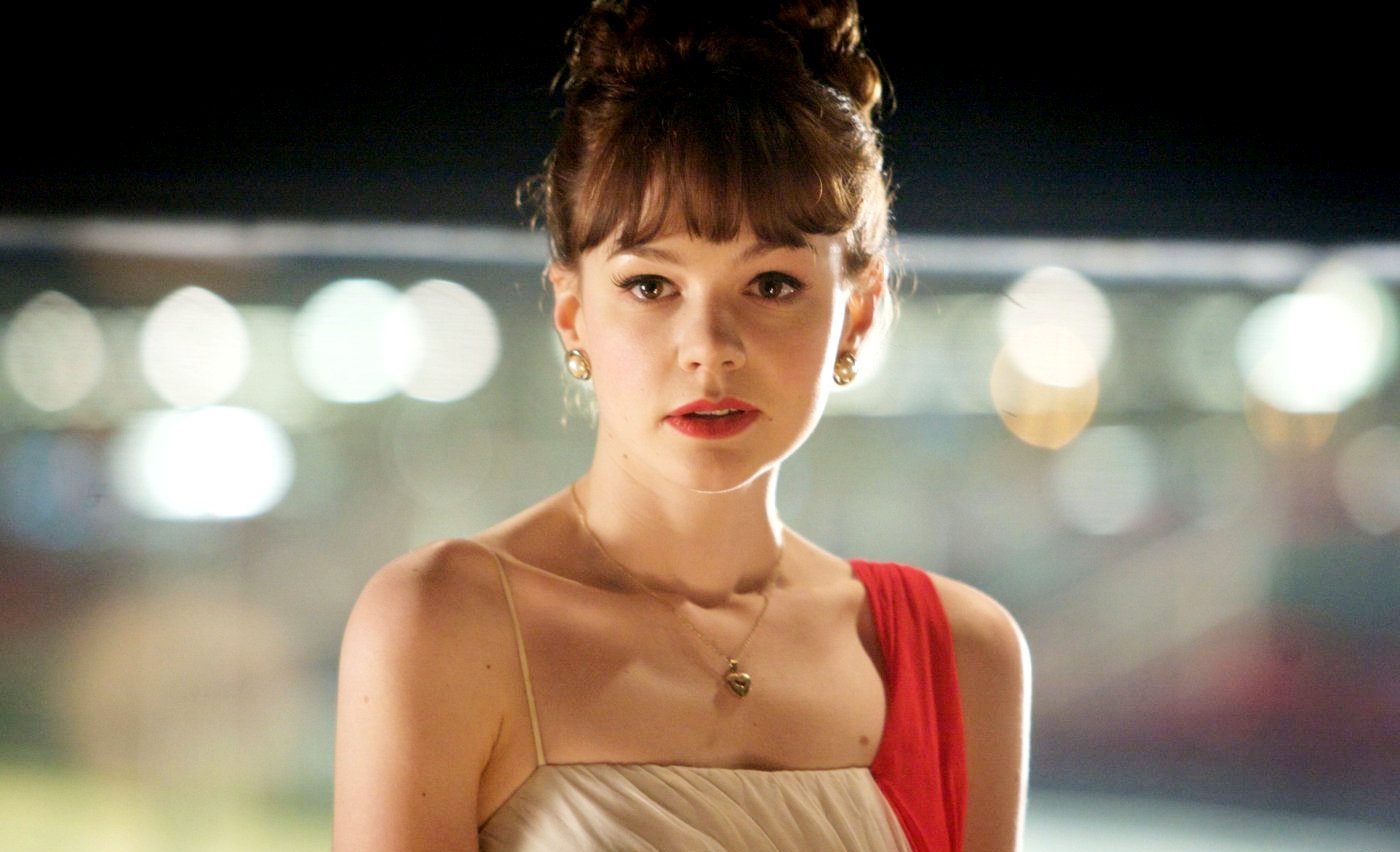
#11 Carey Mulligan in An Education (2009)
After my pandering reviews of An Education someone asked why I liked Carey’s performance so much. I couldn’t come up with an answer. She is, after all, on my list of favourite performances this decade…but still…I can’t encapsulate it. I like Meryl’s because she’s subtle, Catherine because she’s fearless, I admire Julia’s tenacity and on and on. But, I can’t pin down my appreciation of Carey’s Jenny down to a particular x factor. If pushed, the biggest compliment I can pay her is that I feel as if I’ve known Jenny for years. Carey’s performance comes forth in the little things, like with the people you know. You don’t think of your friends in terms of good or evil, it’s the little things – and it’s the same with Jenny. It’s like a moment early on: Graham’s appearance at that catastrophic tea party. Scherfig realises the talent on her hand and even at moments that are seemingly inopportune moments the camera focuses on her. When Graham says “I’ll probably take a year off, do a bit of travelling” – the wince on Carey’s face, almost imperceptible, is beautiful moment from hers. Or earlier, as the stupid boys Graham at the Youth Orchestra her withering glance at them is not accidental but not exaggerated
The challenge that Carey is faced with is to balance Jenny’s maturity (scholastically) against her immaturity on the more worldly aspects of life. She is overwhelmed by David. Notice how her face lights up as she meets him (for the second time) on the road. I love how thrown she is when he enquires about supper – “The trouble is, we’ll already have eaten”. I love the juvenility of her line reading hair, regardless of how we perceive David to be (the best of us probably no he’s no good from the inception) Carey sells Jenny’s infatuation with him, and she makes it so fluid that we don’t doubt that this was the same young lady who was just “…I’m going to smoke and listen to Jacques Brel and wear black…” I say it all the time, but I love it when an actor can convince us of the unsaid. When we’re so under their spell that we believe we can hear their thoughts – that’s when the performance becomes convincing for me, and that’s what Carey does.
The pivotal scene opposite Emma Thompson comes up so often in conversations about Carey that the goodness of it has become somewhat incidental – but it isn’t. It’s not that Jenny has suddenly become fearless, but it’s a slow build-up as she realises that Mrs. Walters – even – is not as imposing as she seems. Her reading of “And you’re aware, I suppose, that our lord was Jewish” is slow and deliberate, as if she now realises who she’s dealing with. Of course in a year of so many great performances that other monologue is the one everyone’s remembering, but you know where my allegiances lie. Every time she reaches “there’s no life or colour in it or fun in it.” I pause to think, it’s not just lines but true feelings. Of course her sincerity here only makes the actual end culmination more unfortunate. It’s the reason that I like the film so much. It seems so common from a distance, but it’s not glib but completely sincere. The film is completely Carey’s and even the moments that are not truly hers – like Alfred’s confession – still focus on her. Her flood of tears is as moving as his poignant ‘confession’.
But I’m not saying anything new here, you know that I am smitten with Carey’s Jenny. But what say you? Worthy of a spot in the top 15 or no?
Related Posts Plugin for WordPress, Blogger...