Showing posts with label 00s in review. Show all posts

Saturday, January 1, 2011

Decade in Review, Revisited: 25 Tear Jerking Scenes (Part Two) - Overdue

So, 2011 is here and I still have outstanding posts from 2010. So just because I just have to complete the list I’ll give it now, even though it’s dreadfully overdue. I gave you fifteen runners up a couple of months ago – tear jerking moments of the aughts. Here are the final ten. Sometimes it’s difficult to pinpoint the actual cause of tears shed vicariously for cinematic creations, but these ten are most salient.

Potentially Heavy Spoilers ahead: Be Warned
                       
#10: Brokeback Mountain: “I Swear” (Guilty Party: Heath Ledger)
The more I see Brokeback Mountain the less I like it, Michelle Williams is still the only thing I find egregiously poor about it – and it’s still a fine film, just not one I’d go crazy over. I’m never even that convinced of the brilliance that is Heath Ledger’s performance in it (I’d probably pick Jake for best in show); well until the last few moments, that is. The older his character grows the better grip Ledger seems to have on himand that line at the end of the film is just a brilliant line reading. It’s sort of an encapsulation of all the things about the film and Heath makes it work brilliantly. Depressingly.

#9: The Curious Case of Benjamin Button: “Some People Dance...” (Guilty Party: David Fincher)
The entire closing monologue of The Curious Case of Benjamin Button is a well handled tearjerker. I’d say it’s prosaic, and I wouldn’t mean it as insult. It’s a bit like a role-call of sorts and seeing all the persons who’ve played a role in Benjamin’s life makes me teary eyed for some reason. And, of course, it’s that final line for Daisy that’s the cinch. Fincher’s epic, of sorts, will continue to be polarising but I’ll continue to be a big fan of it.

#8: Bright Star: Departure (Guilty Party: Ben Whishaw and Abbie Cornish)
I’ll be honest, sometimes Bright Star is just a lesson in poetic sadness. It’s that much more brilliant because it’s moving even when it’s just being glib about it. The final scene that Ben and Abbie share together comes to mind immediately. The two have had a fairytale romance of sorts (unconsummated) and both know that he’s going to die in Italy. They lie on the bed, their bodies making a heart, and talk about the future that will never happen. I deliberately avoid romances like these, but I don’t what it is that makes Jane Campion’s tale so brilliant – it’s a “you had to be there” experience”. It’s easily the saddest part of the film for me…a relationship heading nowhere, and fast.

#7: Moulin Rouge: The Death (Guilty Party: Nicole Kidman and Ewan McGregor)
Is there anything more of a killer in 19th century literature than consumption? It’s weird – we already know Satine is dying but Baz distracts us with the elephant medley so that Satine’s death manages to still be surprising and even more ridiculously depressing

#6: The Hours: Crying (Guilty Party: Meryl Streep)
I singled out Clarissa Vaughn as my favourite Streep performance of the past decade. She has many moments of brilliance – a number of them opposite Ed Harris; but it’s a solitary scene opposite Jeff Daniels that fits the bill here. The two are reminiscing about their mutual friend and Clarissa gets too caught up in the pass, it’s an odd moment – and probably difficult to pull off. She moves from lucid to snivelling in almost a split second. Her line reading of “Don’t come any closer” is a favourite of mine. I’ve said it before, I don’t always love Streep but when she impresses me it’s brilliant.

#5: The Constant Gardener: Returning Ghosts (Guilty Party: Ralph Fiennes and Rachel Weisz)
I don’t know if it’s just me, but for some reason Fernando Mereilles’ 2005 tour de force (says me) The Constant Gardener doesn’t seem to get the appreciation it deserves. It’s impeccably helmed by Mereilles and despite occasional snatches of incongruity the brilliant performances of Ralph Fiennes and Rachel Weisz make up for it. The Constant Gardener is many things in one – a love story, a thriller, an espionage tale...on and on. In the final moments of the film we may have realised the “whodunit” of the entire thing but there’s no closure until the ghost of Tessa shows up to lead Justin away. It sounds so very schmaltzy but there’s some honest and wonderful about it. Weisz and Fiennes really work excellently together and that (imagined) reunion is just a fine bit of emotion, well played.

#4: Atonement: Monologue (Guilty Party: Joe Wright)
Why is the end of Atonement so sad? I can’t say; it just is. Unfulfilled dreams are always depressing, and Vanessa Redgrave is all kinds of brilliant (but that’s a given). She only needs a few moments to make me gloomy, and with the camera on her alone for so much of that monologue she delivers completely. Bring on the waterworks.

#3: The Lord of the Rings: The Fellowship of the Rings “My Captain” (Guilty Party: Sean Bean Viggo Mortensen)
We see a number of deaths in The Lord of the Rings series, but it’s the first (main) one that I find the most striking. Sean Bean’s Boromir is unfortunately forgotten, but he’s excellent. He has the tough task of playing the anti-Aragorn character and his final moments are probably the most moving part of the first film. It’s when he tells Aragorn, “I would have followed you, my captain” that’s the cinch though. Mortensen’s facial response is golden.

#2: Revolutionary Road: Running (Guilty Party: Leonardo DiCaprio)
Revolutionary Road would definitely easily make it on any list of most depressing films of the aughts, well ever to be honest. Depressing, though it is (really, this was one of the most emotionally draining films of the aughts for me), I still can’t help admiring it. It’s a tug-of-war as to who comes out on top – Kate or Leo. They both do excellent work and Kate’s final scenes already make you a little tearful, but as far as tear jerking goes it’s all Leo. When he finds out about April death’s it’s the film’s most harrowing moment (and that’s saying a lot). It all culminates in him running (and crying), from the hospital, from April from the mistakes. It’s a nice bit of direction from Mendes and it’s a brilliant moment for Leo.

#1: The Lord of the Rings: The Return of the King: Credits (Guilty Party: Peter Jackson)
The biggest tearjerker of the decade for me wasn’t even any singular moment of sadness – it was just the culmination of hours upon hours of epic fantasy. I was never a big fan of Frodo (Tolkien’s Frodo or Jackson’s) but the final moments of the film as he makes his way away from the Shire as Sam makes his way back works well in its simplicity. But it’s when Annie Lennox’s “Into the West” comes on that the sadness really sinks in. I’m not sure if it’s sadness per se but it’s something akin – okay, maybe it was exhaustion. Still, it’s definitely the biggest reason for waterworks this past decade, for me.
                 
So, it’s terribly late – but am I the only who went teary at these moments of cinematic sadness?

Tuesday, August 10, 2010

Decade in Review, Revisited: Filial Love

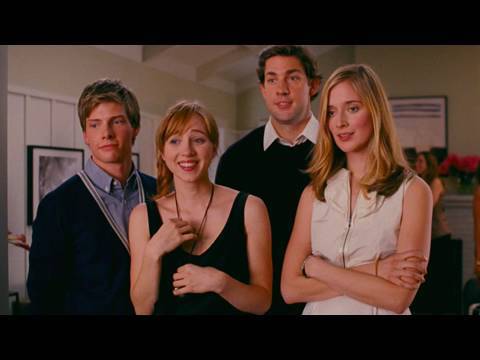
The Family Stone was regarded as something of a flop when it opened at the end of 2005. I have a wan appreciation for the film, even with its egregious faults (it is a bit too prosaic at times, no?). One of the things it does manage to pull off, for the most part, is the rapport between siblings. I’m still most impressed with Diane Keaton’s somewhat acerbic mother-bear, but The Family Stone is most interesting when it takes a look at the sibling pairings, even if I don’t understand them. Claire Danes and Sarah Jessica Parker must be two of the oddest cinematic sisters I can recall. Their relation, despite it’s nicety, is a bit problematic though. The film sees Parker’s Meredith being left out of her prospective fiancé’s family gathering. For some inexplicable the family however falls head over heels in love with Meredith’s sister. Even odder, despite their apparent loathing of Meredith they easily acquiesce to Meredith’s eventual dalliance with his bohemian brother. Odd indeed. But I forgive them their contrivances, because it’s all so sincerely acted. I like seeing siblings onscreen, it’s rarely seen as the A-plot, though.
BROTHER / SISTER
I’ve never been fond of Rachel McAdams – she doesn’t strike me as particularly talented. But her cantankerous Amy is just right without being exaggerated. I hate that she and Mulroney have so little screen time with each other; they do have that peculiar bit of chemistry that works as siblings. It reminds me of Keira Knightley and Patrick Kennedy in Atonement. Yes, Atonement is remembered for its sister/sister pairing, but that moment when Cecilia comes running down the stairs to hug her brother (“I’ve been going doolally here, without you.” She says.) is nicely played. Atonement finds its charm in never giving us more information than necessary, but I do wonder if Cee really did never speak to him again. It’s a bit of a find to see a brother and sister who don’t hate each other. Much of Freaky Friday encompasses Anna fostering a misguided loathing of her brother. I still don’t really understand people who loathe their siblings…but I suppose being on the same wavelength with a sibling is weird. If I could call any 2006 movie a guilty pleasure it might be Nancy Meyers’ The Holiday. One of my favourite random moments come midway through the film when an incensed Iris (Kate Winslet) realises that her brother, Graham (Jude Law), has slept with her house guest. I recent Meyers just a little for pairing Jude and Kate in a movie with hardly any contact, but the strange niceness of the conversation is a treat – in its way. It’s random, but believable. It’s a bit like the relationship of the siblings in another Meyers film – It’s Complicated – another rare treat where siblings (gasp) actually don’t hate each other. A comment on IMDB amused me, a fan said he doubted the film’s realism because the siblings were just too close. Zoe Kazan still annoys me to no end (like she did in The Private Lives of Pippa Lee), but the connection among the Hunter Parrish, Lake Bell and even Kazan is a key part of why the movie charms me, even if I still don’t love it.
Dreamgirls has an entire subplot of sorts dedicated to the brother/sister turmoil. I don’t exactly buy it, Hudson’s skill of a drama actress is…well, sparse. Effie is a bit of a bully, so I don’t exactly blame C. C. for his actions, though I would have liked if they’d kept the number “Effie, Sing My Song”. It wasn’t as authentic as other sibling pairings, but the attempt was poignant in its own way. I think of Paul Dano and Abigail Breslin in Little Miss Sunshine and I always smile (the former of which I’d have given an Oscar or something akin). That single moment where Olive comes out of the bus to hug him on the grass erases any disbelief I would usually have at the craziness (albeit hilarity) of the film; she probably got it from her mother who's letting her brother stay with the family, despite his mental drama. Of course, when it comes to brothers and sisters no films resonate as much as You Can Count on Me and The Savages, incidentally both starring Laura Linney. I’m more in love with the former, but the profundity of sibling relationships is handled brilliantly in both. It’s not often we see such a relationship on screen, but few moments of the decade were as honestly emotional as those last few in You Can Count on Me
BROTHER/BROTHER
For some reasons, brothers don’t always have each others’ back When I think of brothers this past decade I immediately think of Philip Seymour Hoffman and Ethan Hawke in Before the Devil Knows You’re Dead – and that’s not a pleasant picture of sibling relationships.  I suppose Richard Kind and Michael Stuhlberg in A Serious Man are a step up, but they're not ideal either. I’m still conflicted on the film, and even the relationship between the brothers confuses me at times, Larry’s dream seems just a little too fanciful and pat for me to take it at face value. It’s the same way I still don’t believe Wilson’s Ben and Mulroney’s Everett can really be that close of brothers when the credits role for the The Family Stone, but maybe that’s just me. Eric Bana spends the entire of Troy fighting a battle for his brother, a battle I don’t think he believes. That’s a rare bit of brotherly love right there. I like Troy, so does Heather so I’m not alone, I like Orlando Bloom in it too (I wish he’d do something more before having to resort to a life as Legolas). I’m much less wont to accept that Tommy’s good deeds in Brothers are because of his devotion to his brother, although I’m probably cynical like that. I still wish the film had examined a little more of the relationship between the two, Maguire and Gylenhaal are quite believable as brothers.
Casting is important with siblings, I believe in the siblings in Finding Neverland, even though they never really have any significant amount of interaction. I believe in Heather Ledger and Matt Damon in The Brothers’ Grimm too. It’s one of many films that suffered from a misleading ad campaign, but I like it – in its way. I don’t like Matt’s other brother/brother pairing, Stuck On You. The film leaves me with a bad taste in the mouth. I suppose brothers are better as antagonists than being joined at the hip. Who could forget William Hurt and Viggo Mortenson in A History of Violence? Not I. They meet for a few moments, but I’m damned if it isn’t the strongest portion of an already strong film. Am I the only one who’d be interested in a prequel of them back in their heyday as gangsters?
       
SISTER/SISTER
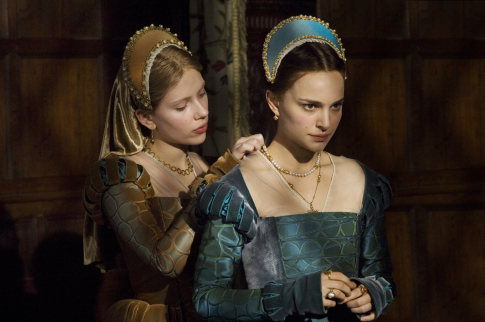
Antagonistic sisters are just as common, though I still wonder if Briony ever harboured any hate towards her sister. Those few minutes at the beginning of Atonement where Keira and Saoirse lounge on the grass are so well played. I suppose, in her way, Briony thought she was helping – but there’s something so disingenuous about her, especially in Ronan’s characterisation. It’s why I cling all the more to the older Briony’s meeting with her. I’m won over to easily by Romola, but still. Keira and she work well together, even though it’s mere moments. But who doesn’t Keira work well with? Pride & Prejudice is still so enjoyable simply because those five actresses make a believable quintet of sisters. Rosamund and Keira gossiping in their bedroom after the first meeting with Darcy Bingley retains all the ease of Austen’s prose, and that alone is difficult. I’m even willing to believe Elizabeth would be so strong (and hard) headed about a vicarious thrill at seeing her sister happily married. Let me revert to Romola, though. I didn’t enjoy I Capture the Castle, even though it proves that Romola is more than worthy of a leading role. I’m mixed on what I think of Rose Byrne, though. The two work but then again they don’t. It’s a bit like Cameron Diaz and Toni Collette in In Her Shoes. I always find that pairing unequivocally odd every time I think of it. It just doesn’t seem logical, even though the film is sweet in its bauble like way (and Shirley MacLaine is always a plus). Sisters at odds with each other will forever pervade, though. Like Scarlett Johansson and Natalie Portman in The Other Boleyn – a film I despise as much as it’s horrible source. There’s something just too pedestrian about having Anne and Mary battle for the king’s affection. Natalie rules the film’s first half, and Scarlett the second – though neither of them (or a nice bit role from Kristin Scott Thomas) can salvage the film.
That sort of antagonistic love among sisters occurs in Rachel Getting Married. Sooner or later I think I’ll have to review this film, I don’t love it and I don’t love Anne Hathaway in it – but I find Rosemarie DeWitt to be simply flawless. Overall, the hate/love between the two sisters works; like it does with Nicole Kidman and Jennifer Jason Leigh in Margot at the Wedding. I only now realise the similarities with the fuckup sister turning up for the other one’s wedding, although acerbic Margot would have the sly Kym for lunch, dessert even. Gosford Park never stays on one subject too long, but the sibling rivalry among Sylvia, Lavinia and Constance is too palpable to ignore – especially when Sylvia’s husband is much too fond of her sister. Kristin Scott Thomas’ other pairing with an actress is more lucrative (sibling wise). A significant portion of I’ve Loved You So Long’s beauty comprises the relationship between the two sisters, who make a tentative start for reunion. In retrospect Elsa Zylberstein is every bit as good as Kristin in her role, though sadly neither woman was really remembered that year. Speaking of ignored, Le Divorce harbours another beautiful sister/sister pairing – Naomi Watts and Kate Hudson – that went by ignored. Kate and Naomi are brilliant together; even in silly bits (a moment where the two imitate bowing swans is beautifully played). It’s the simple moments that make those filial bonds seem real, like in Bright Star Abbie Cornish’s random “I love you!” to her sister after reading one of Keats’ letter. I love that moment in the field, no less because Edie Martin is just an adorable child actor and her line reading of “Fanny wants a knife, to kill herself” never fails to amuse me. In the Upside of Anger the four sisters lay on the grass after their father has left. The four actresses look nothing like each other, and even less like their “mother” Joan Allen – but it all works because they have the believability thing going despite the obvious things working against them...and on the best of days, what more could we ask for?
I’m woefully enamoured by film that feature sibling love prominently, though it’s not all bad when they’re at each others throats. Which of the films featured stand out at you the most this past decade?
    
Featured Films (Alpha): Atonement (2007), Before the Devil Knows You’re Dead (2007), Bright Star, Brothers (2009), The Brothers Grimm (2005), Le Divorce (2003), Dreamgirls (2006), The Family Stone (2005), Finding Neverland (2004), Freaky Friday (2003), Gosford Park (2001), A History of Violence (2005), The Holiday (2006), I Capture the Castle (2003), In Her Shoes (2005), It’s Complicated (2009), I’ve Loved You So Long (2008), Little Miss Sunshine (2006), Margot at the Wedding (2007), The Other Boleyn Girl (2008), Pride & Prejudice (2005), Rachel Getting Married (2008), The Savages (2007), A Serious Man (2009), Stuck On You (2003), Troy (2004), The Upside of Anger (2005), You Can Count On Me (2000)

Monday, July 26, 2010

Decade in Review, Revisited: The Worst

According to my count I’ve seen 650 films from the last decade, which is more or less an accurate count. I was particularly anxious to cover the “worst of” list, because looking at the worst is even more subjective than looking at the best. I have a feeling I may step on some toes, but it’s all done in good faith.
             
Of the films I remember seeing (yes, I tabulated a list) I’ve given 45 Fs. I’m unsure if that’s too much or too little. Here they are, alphabetically…
              
Big Momma’s House (2000) / Anger Management (2003) / Are We There Yet (2005) / Around the World in 80 Days (2004) / Big Fat Liar (2002) / Big Momma’s House II (2006) / Blades of Glory (2007) / Boat Trip (2003) / Cats & Dogs (2001) / Cinderella Story (2004) / Daredevil (2003) / Dukes of Hazzard (2005) / Duplex (2003) / Elektra (2005) / Fred Claus (2007) / Garfield: A Tale of Two Kitties (2006) / High Crimes (2002) / House of Wax (2005) / I Love You Beth Cooper (2009) / John Q (2002) / Josie & the Pussycats (2001) / Kangaroo Jack (2003) / Like Mike (2002) / The Lizzie MaGuire Movie (2003) / Love Don’t Cost A Thing (2003) / Mad Money (2008) / Marley & Me (2008) / Material Girls (2006) / Men In Black II (2002) / Nacho Libre (2006) / Next (2007) / Norbit (2007) / Not Another Teen Movie (2001) / Rat Race (2001) / The Ring (2002) / Scary Movie II (2001) / Scary Movie III (2003) / Scooby Doo (2002) / Seven Pounds (2008) / Shallow Hal (2001) / Stuart Little II (2002) / Stuck On You (2003) / Swing Vote (2008) / Wild Hogs (2007) / XXX (2002)
         
The above 45 films are those eligible for my own personal awards of “Worst”. The biggest offender was 2002 with a whopping ten titles emerging from it. 2000 and 2009 (the book ends) only got one a piece.
            
The Worst Performances
Runners Up (Paris Hilton in House of Wax, Fred Willard in Scooby Doo, Ben Stiller in Blades of Glory, Ben Stiller in Duplex, Jack Black in Shallow Hal)


#10: Ben Affleck in Daredevil
A performance so monotonous that I can’t believe this is the same man who played the electric Ned in Shakespeare in Love. Perhaps, he’s only good in small doses.
        
#9: Jack Black in Nacho Libre
I’ve covered this before – let’s just leave it at bad, bad, bad.
        
#8: Eddie Murphey in Norbit
An atrocity, and probably the lowest point in his career (and there have been other low points); so disgusting it fails to be humorous and just becomes sad.

           
#7: Martin Lawrence in Big Momma’s House
It’s strange how this managed a sequel, but then it seems sequels have nothing to do with the predecessor being good. What’s more it has the feel of being improvisation: horrible improvisation.
         
#6: Jerry O’Connell in Kangaroo Jack
O'Connell seemed to show at least an average amount of competence in Crossing Jordan. Thus, I wonder if he's really that talent-less or just not talented enough to make this drivel work. It's painful to watch at times, and I think he knows.      


#5: Hayley Duff in Material Girls
Sure, she'll never be as big as her sister (and by big I mean terrible), but she does give her a run for her money in the shrill acting department.

#4: Hayden Panetirre in I Love You, Beth Cooper
Perhaps it's unfair to single her out as the film's worse offender, but then again - no. 

      
# 3: Hilary Duff in Material Girls
It's one of the oddest performance I've seen. She manages to overact and underact at the same time, and still manages to annoy me with her shrill platitudes (the script's fault as much) on life. What a bore.
       
#2: Will Ferrell in Blades of Glory
There has been one occasion where I have not loathed Will Ferrell, in Stranger than Fiction. Other than not, his talent eludes me. but this is just too horrible for words.
         
#1: Anthony Anderson in Kangaroo Jack
I can't speak of this objectively because its very existence offends me. Suffice to say, it's not very good.
              
The Worst Worst
Runners Up: (Big Momma’s House, Daredevil, Nacho Libre, Shallow Hal, Stuart Little II)

#10: Blades of Glory
I’ve permanently been standoffish about Will Ferrell and Ben Stiller since. This is the sort of contemptible imaginings that just make me sigh at the state of “comedy” in this day and age. What a chore.

#9: Scary Movie III
Dare I continue? Anna Farris shows burst of talent at times, but it’s never in this franchise. It just gets worse and worse and this third incarnation is just vile. To add to its badness they decide to spoof every single movie they can think of. Epic fail. Epic.

#8: Garfield: A Tale of Two Kitties
I can’t explain what prompted me to see this. I missed the original (with good reason apparently). I like the comics, but the sight of this disgusting cat makes me want to hurl and with a story that beats as much as a punctured heart I curse the day that the filmmakers realised the money to be made in anamorphic characters.

#7: I Love You, Beth Cooper
It's a distasteful “coming of age” film that reinforces all the stereotypes present in countless other teen romantic comedies – but worse. From it’s unbearably clichéd ruses to its pointless plot points and wooden acting I’m glad few people (I know) mention it.

#6: Men In Black II
I remember being mildly charmed by the original; the sequel? Not so much. Will Smith aggravates me most of the time, and though I don’t despise Tommy Lee Jones I’m not a big fan of his. With this unfortunate sequel I though at least they’d stop with the pairing; I was wrong

#5: Elektra
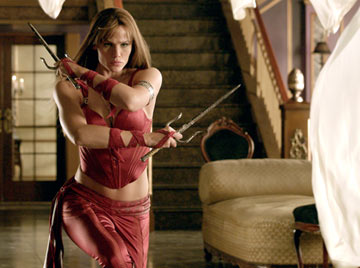
Though I do like Jennifer Garner (a well deserved Emmy winner for Alias) I can’t fathom what made her think that we wanted to see this movie. Daredevil was bad, but this was even worse because we didn’t get a chance to see Collin Farrell ham it up. Ugh.

#4: Norbit
I didn’t want Murphy to win the Oscar for Dreamgirls, and if this is what prevented it – I’m fine. That doesn’t make it any better, though. Eddie Murphy has talent, but the offensiveness horribleness of this “film” is unnerving. What a travesty.

#3: Big Momma’s House II
What’s worse than the original? The sequel. I suppose once upon a time the crossdressing thing held some appeal (Robin Williams, Dustin Hoffman, Jack Lemmon all did it with genuine comedic ability) but this tired film is such a chore I cringe that this is what black comedy has turned. I cringe that this is what ANY sort of comedy has turned to.

#2: Material Girls
Perhaps, there’s just the slightest bit of folly in expecting this to be good; but I’m not one to harshly judge all teenage fodder. In the case of Material Girls, all the hate is justified. Uninspired, ridiculous and so horribly acting I can’t believe that Anjelica Huston has reached this level.

#1: Kangaroo Jack
I get a headache thinking about the horror of this film. A film about two idiots who lose thousands of dollars in a jacket when the put it on a kangaroo who is not dead. The film is so abysmal I’m at a loss to how it’s not been rated 0 on all the media outlets. Its very existence seems like an abominations to me, and I never want to see it again. Ever.
            
Is there any film above that you’d be willing to defend? Make your arguments. 
        
An F is more than just a bad movie; an F is a film I wish would disappear completely. What were your Fs last decade?

Wednesday, July 14, 2010

Decade in Review, Revisited: The Screenplays

Screenplays are different from the actual films they precipitate. Quite often the screenplay ends up being my favourite of a film. It all begins with the screenplay really – here are the ones that I remember most clearly from the last decade.
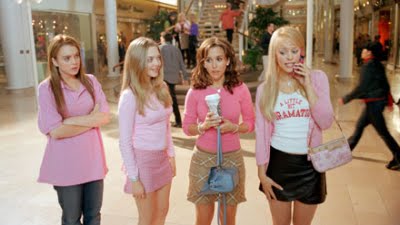
Runners Up: (Alpha): Big Fish* – adapted (2003); Bright Star* – original (2009); Brokeback Mountain – adapted (2005); The Constant Gardener – adapted (2005); Corpse Bride* – original (2005); The Fantastic Mr. Fox – adapted (2009); In the Loop – adapted (2009); Little Miss Sunshine  – original (2006); Mean Girls* – adapted (2004); (2009); The Others* – original (2001)
       
#15: A History of Violence (2005), adaptation by Josh Olson
Richie Cusack: “So you like that farm life? Milking cows and shit?”
Tom Stall: “I don't have a farm.”
Richie Cusack: [chuckling] “No? Fogarty thought you lived on some kind of farm. Said you could smell pig. How that old fart would know what a pig smells like, I don't know, but that's what he said.”
Visceral is not a word I find myself using often, but it’s the one that comes to mind immediately when I think of A History of Violence. It approaches an issue – a character with two sensibilities – in a manner that’s unorthodox and also quite sanguine. Its aim is not to shock, at least not unwarrantedly. In approaching the concept with such smoothness Tom Stall becomes a symbol for any man.
     
#14: Chicago (2002), adaptation by Bill Condon
Billy: “When she returns, she gently wakes up Harry. Harry says, "What? I'm alone." She says, "Alone? You got two other women in bed with you ." So, get this. Harry says, Come on , doll . You gonna believe what you see or what I tell you?
Marshall is not credited, though a significant amount of the idea emanates from him. Still, Condon does excellent here. He doesn’t get overwhelmed by Ebb and Kander’s standards and forget to make sure they’re resting on a dependable set of words. He raises the standard ensuring that the every scene exists as it should and the spoken scenes succeed as much as the musical ones.
        
#13: You Can Count on Me (2000), originated by Kenneth Lonergan
Terry: “Where are we going?”
Sammy: “To pick up Rudy.”
Terry: “What, do you not even want me to come visit now?”
Sammy: “Of course I want you to visit, you idiot! I've been looking forward to seeing you from the moment I got your letter, I told everyone in town that you were coming home, I cleaned the whole fucking house just so it would look nice for you! I had no idea you were just broke again! I wish you'd just send me an invoice!”
A bitingly realistic and poignant look at filial love, it’s easy to forget and just see the excellent work being done by Ruffalo and Linney. Longergan crafts his screenplay with a surprising lack of pretentiousness, and even when we might hope for something a little more “movie-like” she’s careful to ensure that her characters are acting in keeping with the world he’s created for them.

#12: Babel (2006), originated by Guillermo Arriaga
Yussef: “I killed the American, I was the only one who shot at you. They did nothing... nothing. Kill me, but save my brother, he did nothing... nothing. Save my brother... he did nothing. ”
It’s simple to ignore because of Crash, which it’s mistakenly seen as a derivative of. It does tend to get a little bit too heavy-handed when delving into its symbolism but I forgive a few of its occasional missteps because in the greater realm of things I do treasure its ultimate result. The balancing between the three narratives is handled gracefully; and the message though obvious is not less profound for it.

#11: Traffic (2000), adapted by Stephen Gaghan
Caroline: “On the good days, I feel like I get it, like it all makes sense. I can stay in the moment, I don't have to control everything in the future, and I believe everything is gonna work out fine. On the bad days I just want to grab the phone and start dialing numbers. I want to pull my hair and run through the streets screaming. But thanks to the people I've met in these rooms, like Margaret and Jim and Sarah, I'm pretty sure I'm gonna make it through today.” 
Another massive ensemble drama, Traffic depends significantly on its screenplay. It's riveting and it flies by, but it's also incredibly smart. Gaghan has an ear for dialogue, especially topical dialogue, and the script serves as an excellent appraisal of current affairs.
     
#10: Erin Brockovich (2000), originated by Susannah Grant
Erin: “I've been working, that is all I have been doing, what am I supposed to do check in with you every two seconds?” 
Brenda: “Yes, it's called accountability and...” 
Erin: “I'm not talking to you, bitch!”
Brenda: “Excuse me?” 
Erin: “Get out of my face!”
This is another one that’s often overlooked. Grant takes a concept that’s almost pedestrian – the hardworking heroine against the world – and creates a screenplay that’s uncluttered and not at all condescending. We forget at times that at the end of the day this film is ultimately a legal drama, because Grant is willing to touch on more than just a single issue in her script.
    
#9: An Education (2009), adaptation by Nick Hornby
Helen: We should go shopping together one day, if you want.
Jenny: That would be nice. But South Ken, C'est beaucoup trop cher pour moi.
[Pause]
Helen: Sorry?
Jenny: I just said...It was too expensive for me.
Helen: No you didn't. You said something completely different.
Hornby has the admirable ability to push a host of ideas into a particularly short screenplay. Moreover, though it ostensibly focuses on something as singular as a girl’s “coming-of-age” each character, regardless of their relative importance, speaks words that are completely their own.

#8: Match Point (2005), originated by Woody Allen
Chris: “The man who said "I'd rather be lucky than good" saw deeply into life. People are afraid to face how great a part of life is dependent on luck. It's scary to think so much is out of one's control. There are moments in a match when the ball hits the top of the net, and for a split second, it can either go forward or fall back. With a little luck, it goes forward, and you win. Or maybe it doesn't, and you lose.” 
On the surface it’s just Woody Allen’s perverse take on a classic tale, but underneath it’s a thoroughly original and almost subversive take on people in the world. It stings as much as it amuses and when you think it’s a trifle there’s always something deeper lurking below – if you’re willing to look closer.
      
#7: The Departed (2006), adaptation by William Monahan
Uncle Ed: “Are you trying to prove something to the family?”
Billy Costigan: “When you say "the family," who do mean exactly? You?”
Uncle Ed: “You always have to question everything, don't you?”
Billy Costigan: “Maybe it would have done you some good to have some *questions* from time to time, you know? Am I an asshole? Are my kids a mess? Is my wife a money-grubbing whore? I mean, those are questions, right? Have I ever been good to my dying sister or am I just now pretending to be?
Monahan’s adaptation of the Asian drama is a beast of its own. Complete with little character idiosyncrasies that are all his Monahan’s piece is completely original – adaptation or not. The world he creates is probably fabricated but everything that occurs is rendered believable simply because of the sameness throughout the narrative.

#6: Burn After Reading* (2008), originated by Ethan and Joel Coen
Osbourne: “And you're my wife's lover?”
Ted: [shaking his head] “No.”
Osbourne: “Then what are you doing here? [pause] I know you. You're the guy from the gym.”
Ted: “I'm not here representing HardBodies.”
Osbourne: “Oh, yes. I know very well what you represent. [pause] You represent the idiocy of today. ”
This remains as one of the most inventive comedies of the decade, and the script is one of the decade’s best. The entire thing is permeated with a glorious amount of irreverence that doesn’t stop the harsh truths in the screenplay from being seen. It’s the very fact that it doesn’t take itself too seriously though, not caring to sentimentalise any of its characters.

#5: Atonement (2007), adaptation by Christopher Hampton
Robbie: “Dearest Cecilia, the story can resume. The one I had been planning on that evening walk. I can become again the man who once crossed the surrey park at dusk, in my best suit, swaggering on the promise of life. The man who, with the clarity of passion, made love to you in the library. The story can resume. I will return. Find you, love you, marry you and live without shame.”
Not as piercing as his work on Dangerous Liaisons, but done with the same amount of astonishing brevity. Like any such adaptation the script is littered with bits of symbolism here and there, and it must have been a task creating a screenplay from McEwan’s impressive novel. He doesn’t quake at the challenge, though, and the story works well on its own.
       
#4: The Hours (2003), adaptation by David Hare
Laura: “It would be wonderful to say you regretted it. It would be easy. But what does it mean? What does it mean to regret when you have no choice? It's what you can bear. There it is. No one's going to forgive me. It was death. I chose life.”
I’ve not read Cunningham’s novel, though I’ve read extensive biographies on Woolf and Mrs. Dalloway. The screenplay exists seamlessly; there are three women but it is one story. Oddly, it never becomes too “talky”, the dialogue is never obtrusive. Instead everything flows together in beautiful subtlety.

#3: Before the Devil Knows You’re Dead* (2007), originated by Kelly Masterson
Gina: “When are you going to grow up, Hank? We have a really good thing going, and you should just enjoy it. We have a really good time in bed. I don't ask for anything.”
Hank: “I love you. I want more.”
Gina: “So does Oliver Twist.” 
Masterson’s script is discordant, but that's the beauty of it. Such a tale could easily have become a message film, instea she turns it into a nuanced character study giving every character their pivotal moment – and ensuring that plot points that occur are readdressed. She refuses to conform to the norm creating a world that is completely hers.
     
#2: Eternal Sunshine of the Spotless Mind (2004), originated Charlie Kauffman with Michael Gondry
Joel: “I can't see anything that I don't like about you.”
Clementine: “But you will! But you will. You know, you will think of things. And I'll get bored with you and feel trapped because that's what happens with me.”
Joel: “Okay.”
Clementine: [pauses] “Okay. ”
It’s an obvious choice, but deservedly so. It is a work that’s strikingly original even though the issues are ones we know all too well. Ostensibly it seems to be science fiction, but that solitary plot point is just that, and the issues addressed are done so with some of the most perceptive and smart comedic writing.

#1: Gosford Park (2001), originated by Julian Fellowes with Robert Altman
Sylvia: “Where's that wretched Mabel.”
Aunt Constance: “Has anyone checked her outfit? She's probably in black velvet with a feather in her hair.”
Lavinia: “She's in the morning room looking perfectly normal. Don't be such a snob aunt Constance.”
Aunt Constance: “Me? I haven't a snobish bone in my body.”
So subtle and yet so intense, addressing serious issues and yet so hilarious it’s a choice that comes easily – almost too easily. The ensemble drama gives the writer much ground to cover, and Fellowes does it with aplomb. He travels upstairs, downstairs and back again – but never tries too hard. Character development is vivid, but sometimes subtle we need to look (and listen) carefully…and just when you think you can put it in a box, he’s waiting to add something to new. Perfect.
     
Twelve originals and thirteen adaptations make up my twenty favourite screenplays. The ones with asterisks (seven) were, unfortunately, ignored by the Academy.
     
Which screenplay from the last decade would you want to take credit for?

Tuesday, July 6, 2010

Decade in Review, Revisited: Memorable Characters

Yes, I'm back with this again. It's really a never ending feature, though I wrapped up with my favourite casts, actors, actresses, music and costumes the sky is the limit and there's more I could ruminate on...and with nothing to do, why not?
           
Dan’s own list has inspired me to revisit my Decade in Review feature. I did have some categories I didn’t touch on, and what better time to reassess? The question of memorable characters is a tough one…my guess is as flawed as yours, but here goes…what makes them memorable for me? It’s not really the performances, though I’d say each performer does a good job. It’s really about how ready I am to recall the character as a complete entity with just the slightest hint – like a key phrase…or an article of clothing, a wisp of hair or an important weapon.
                

#10: Hans Landa (played by Christoph Waltz)
Key Token: Proficiency in language (and other things) which is, naturally, “a bingo”
See how objective I am? Though I’m neither here nor there on Inglourious Basterds, I’m not so fickle to leave Waltz’s Landa off the list. It’s difficult with recent characters to decide whether or not they’ll endure, and I suppose there’s a possibility he won’t. I was tempted to put Helen Von Bismarck on the list instead of him, but I knew that was just nepotism for Kruger’s excellent performance and not really any objective longevity precipitated by her character’s brilliance.
          
#9: Tom Stall (played by Viggo Mortensen)
Key Token: The gun (but, of course)
I find it so difficult to believe this man has been acting since the mid eighties. He just burst on to the scene with The Lord of the Rings and has just been improving consistently. Still, it’s this 2005 performance that stands above his other creations (and above a majority of actors). It’s two men, and yet it’s one man. They’re both deliberate, they’re both smart and they both have a way with guns.
           
#8: The Bride (played by Uma Thurman)
Key Token: The costume
Yes, Tarantino again. Ironic, since I’m less than fond of him. I will admit that I consider Kill Bill to be his strongest venture and a considerable amount of that lies in Uma’s Bride. Of course it’s more than Uma’s performance; the Bride has just endured as one of those iconic characters – from the jumpsuit, to the moves to the van.
        
#7: Sweeney Todd (played by Johnny Depp)
Key Token: The hair
Apparently the tuft of white hair was Depp’s decision, which doesn’t surprise me. From the guttural growl to the permanent scowl it’s all very individual (and judging from the videos I've seen unlike any characterisation of Sweeney Todd before). Depp is not as unoriginal performer as many have decided.
                    
#6: Bill the Butcher (played by Daniel Day Lewis)
Key Token: The voice
Perhaps it’s because I have not internalised There Will be Blood as much as Gangs of New York or perhaps it’s because Bill’s bloody ways scare me more than Plainview. Either way, I consider this to be Day Lewis’ most iconic role. The violence, the determination, the patriotism – no matter how misguided, and of course that voice. He played a lover, and then a butcher (both excellently) – I want a third Scorsese pairing.
           
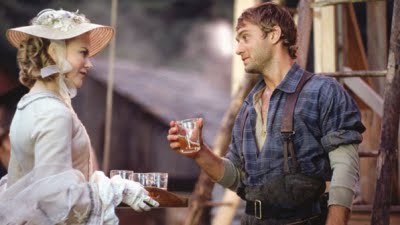
#5: Satine (played by Nicole Kidman)
Key Token: The hair
Nicole back when she was a redhead. I was tempted to note the pale skin, or her long legs or perhaps even her voice but it’s the long red tresses that remind me of Satine the most...and I just love that look on Nicole's face above.
         
#4: Jack Sparrow (played by Johnny Depp)
Key Token: Drunkenness
A bit of an obvious choice, but that’s why it’s iconic.
          
#3: Miranda Priestley (played by Meryl Streep)
Key Token: “That’s all”
Oh, Streep. Her ubiquity exasperates me, but she was served up a delicious role here and milked it for all it was worth. I do love my comedy subtle and though she’s not my favourite performance in the film, she is the character we return to time and time again. Whether we remember her well tended hair, her immaculate wardrobe or her imperious glance, she was a true woman of the ages. That’s all.
     
#2: Shrek (voiced by Mike Myers)
Key Token: Skin colour
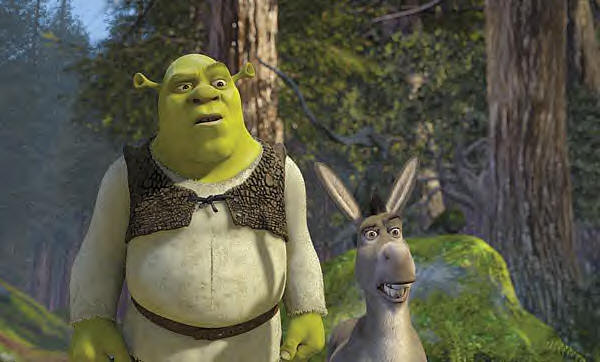
Must I really justify this? A franchise that has worn thin? Surely. But Shrek is an iconic, not the best animated character of the last decade but easily the most memorable for me.
       
#1: Gandalf the Grey, then White (played by Ian McKellen)
Key Token: The hair
This was too easy really. I did cite the performance as one of the decade’s best, and after a while it became difficult to say where the brilliance of McKellen’s performance ended and the iconicity of Gandalf began. From his quotable lines, to his enigmatic stares, his magical prowess and his commanding voice no character from the last decade leaves such a lasting impression on me as Gandalf, whether he be Grey or White.
              

Monday, April 19, 2010

Decade in Review: The Best

I think I can say I've done my duty in recapping the decade. I've done a number of entries dedicated to the decade in review. I'm sure there's some miscellaneous category, but if it comes to me I'll let you know. I think it's time for me to stop looking back before I turn into a pillar of salt, and I suppose that the logical conclusion is to sum it up with the best films of the decade. But, you know me - always atypical, so I'm not recapping film quality, but acting quality. What were the films this past decade with the best ensembles? It's a question that always triggers me thoughts (I did the same for the nineties). So with no explanations I list the 30 best film ensembles of the decade -with a few runners up. Let me remind you, this is not a list of the best films. It's a list of the ensembles that I think were best - the most collectively good performances, the best chemistry among actors, the most talented....
          
Runners Up (alpha): The Constant Gardener, Closer, Dreamgirls, Erin BrockovichIn the Bedroom, In the Loop, King Kong, The Messenger, The Reader, Sweeney Todd

Tier Five
 
                      
Tier Four
  
           
Tier Three
 
             
Tier Two
 

Tier One

The Greatest Ensemble of the Decade
                                              
I'd expect that fans of certains films are foaming at the mouth, so do your worst and tell me where I went wrong. What's missing from the list, what should be missing...what are your thoughts on the top choice?
Related Posts Plugin for WordPress, Blogger...