Showing posts with label Ben Whishaw. Show all posts

Wednesday, January 12, 2011

“In Search Of A Good Role” : A Top 5 list

Damn, this is overdue. What was it...months ago....that Univarn published this fine list of actors who never get the love they deserve (Castor and Ruth followed with lists of their own). If you’re a good debater you can make a case for any number of actors not getting their due, but sometimes it’s especially piercing when some actors just never get that single role that you could point to as encapsulating all the talent they have....or worse the role will come and no will see the film (or care about the performance) – something as incidental as timing could be their downfall. These five actors immediately come to mind when I think of actors who don’t get their due. Some have already given brilliant performances, but they still have not reached that level of fame that their peers have....who knows why? More importantly they’re all relatively young thespians who seem to have so much potential but never get recognised for it. This is my shout-out to them...
                                      
Romola Garai
I was fascinated by Garai’s work in Atonement, she topped my supporting actress list that year...and yet of the five principal players she earned the least buzz for her performance. I’m still not sure why, because I still can’t think of anything in particular that’s off-putting about her performance. Saoirse’s Briony’s strongpoint was her eyes, Vanessa’s was her eyes – what Romola has is a countenance that you can’t help but find sympathetic (which is why she’s the perfect person to encapsulate the imaginary Briony of the middle act). It’s the same sort of thing she does in I Capture A Castle – a film I’m not fond of, but a performance that soars despite confinements from the script.
A 2010 Role She Could Have Tackled: Florence in Greenberg; don’t get me wrong – Greta Gerwig was lovely in Greenberg but wouldn’t that role be lovely for Romola? Effusively charming, adult and yet innocent and altogether winsome without being too perfect. I suppose that if she ever has a chance of getting the fame she deserves she might need to leave the British roles behind (which is a shame, because I think the British are just awesome).
                                    
Ben Foster
I’m still absolutely flummoxed as to how Woody Harrelson swept through being nominated for every important precursor last year for The Messenger when Ben Foster turned up at nary a one. Where is the justice? The Messenger remains as one of my favourite films from the 2009, and much of that had to do with the quiet intensity of Foster’s protagonist. What makes him so special, though, is his ability to play quiet and brooding and switch instantly to loud and explosive. And he’s been at it so long, surely he deserves to catch a break.
A 2010 Role She Could Have Tackled: It’s too easy, but I’m calling him for Jem, the role Jeremy Renner originated in The Town. Renner WAS my favourite part of the film, but I’d have loved to see Foster that irrepressible showboating sidekick. If there was one thing I didn’t like about Renner’s Jem was how lacking in personality he was, he was officious enough but never charismatic which is something I think Ben could pull off.
                                 
Kerry Washington
I don’t believe that I’m the only one who’s been championing for dear Ms. Washington to get more recognition. Truth is, it’s especially difficult being a black actress in the business – but Kerry’s as adept at playing in the typical black picture as she is in something more generically prestigious. Acting has many facets – voice, body language, facial expressions, but I’m particularly fond of Kerry’s speaking voice. It’s especially crisp and expressive, and she always does well with large bits of dialogue.
A 2010 Role She Could Have Tackled: I wonder what it would have been like to see Kerry take the lead in Veronika Decides to Die. That’s a movie that went by unnoticed (shame) but the quiet passion of Veronika is something I think Kerry could handle beautifully – if given the chance.
             
Ben Whishaw
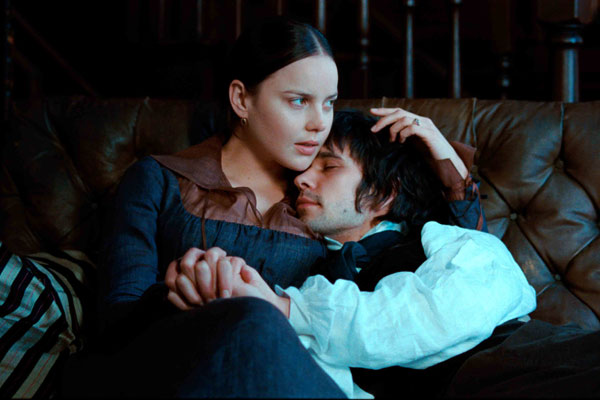
Ah, Ben Whishaw. I’m a fan and Bright Star turned me into a raving fanatic. Someone tell me again why that movie went by with so little notice? Actually, don’t tell me – there’s no good reason. It’s clichéd, but Whishaw is like the epitome of the sensitive artist which is perhaps why his Keats’ doesn’t seem like acting – but that deliberate poignancy he puts into his performances (re Brideshead Revisited) is something brilliant to watch.
 A 2010 Role She Could Have Tackled: With all that sensitivity, isn’t he an obvious choice for Tommy in Never Let Me Go? After being floored by he and Carey last year, I’ve put the hopes of seeing the two in a film of things I want to happen...and as fine as Garfield is, Whishaw opposite Carey would have just been incredible.

Rosamund Pike
Rosamund Pike seems sort of ageless to me, since seeing her in Die Another Day all the way through Pride & Prejudice and An Education she never seems to age, if anything she seems younger. It’s weird how her characters seem to be on a mental regression from the steely to the quite silly Helen. It’s her talent as an actor, though, and she doesn’t come off like any of these characters in interviews. She’s able to embody a wide array of supporting players on the sidelines, which proably accounts for her being forgotten.
A 2010 Role She Could Have Tackled: How old is Cattrall’s Amelia supposed to be in The Ghost Writer? I love her in it, but I wonder what someone younger like ROsamund would have done with the role. We know she can handle the ice-queen role well and though the thought of her against Brosnan is not particularly appealing (because Brosnan is terrible) I like the idea of her playing this role.
                  
Which of these five is most overdue for some appreciation? Any roles they should have gotten it for? Any role they could have played?

Tuesday, August 3, 2010

Movie Meme, Day 3: Favourite Oscar Nominated Movie 2009 / 2010

No need to worry Carey...you're on the list...
This was another outrageously simple day in the meme. Anyone reading the blog from December to June would have seen me going all crazy for Carey Mulligan and An Education. It was my favourite film of the last season, although recently the #2 of the year has been edging closer and closer to the top spot. Right now it’d be a tough choice for me to choose which is my favourite – hence, I’m featuring both today.
...You too Ben...
I have a bit of an unusual appreciation of British films (or at least, British actors) so the #1/#2 status of An Education / Bright Star is not exactly astonishing, for me at least. In my extremely nepotistic (naturally) personal awards canon the two films were my favourite for acting (Whishaw and Schneider of Bright Star, Mulligan of An Education), writing (screenplays for both), song (An Education), score (Bright Star) and runner ups in a host of other ones (including Molina and Pike from An Education and Cornish from Bright Star). Just in case you don’t know what they’re about…
        
An Education (complicatedly, and inadequately, reviewed) is a coming-of-age pseudo drama about a 16 year old school girl in Twickenham, England. And Bright Star (semi-reviewed along with A Single Man and Crazy Heart) tells the story of the last few years of John Keats – poetic royalty – life. Both films garnered most notices (Oscar aside, grrr) for the performances of their leading ladies and considering that Carey and Abbie were one / two in my Actress profile of the last year – the accolades weren’t underserved. I mentioned Carey’s turn in my Performances of the Decade feature as I did with Ben Whishaw (as the eponymous Keats). Both actors have a knack for expert facial expressions. I’d love to see Abbie, Ben and Carey in a movie together.
Technically, there’s little that’s similar between the two – but it’s odd how Cara Seymour and Kerry Fox both give brilliant (albeit short) supporting turns as the mothers of our heroines, and Paul Schneider and Alfred Molina (#1/#2 on my Supporting Actor List) were unjustly ignored for performances that seemed overwrought but were more expertly executed than some seemed to realised. There’s also the fact that both pieces were directed by women. Sure, Kathryn Bigelow was the woman everyone was going wild for last year, but it’s a pity Scherfig and especially Jane Campion couldn’t be more appreciated for their contributions (Campion also wrote the screenplay).
I’ve gotten over Oscar’s fickleness, I'm okay with the fact that Bright Star managed to get only one Oscar nomination and that together the two films won 0. Right now, I'm just glad that 2009 offered two (and more) excellent films. whenever I do eventually revamp my top 100 list to include recent films I’m not sure if An Education or Bright Star would come out higher – but they’d both be there. I do love them both...
           
Which do you prefer?
       
And herein ends another day of the MEME

Monday, March 8, 2010

Performances of the Decade (Male)

It’s usually logical that the more recent we’ve seen a film; the more likely we are to remember it. But, that doesn’t usually work for me. My favourites don’t always end up being my favourites instantaneously but grow into treasures after months (sometimes years) of careful perusal. I suppose, for this reason, I should have just excised 2009 performances from being eligible for consideration but it wouldn’t be performances of the decade with nine years. And I couldn’t leave out Carey or this inclusion, which is not merely coincidental but well deserved.
      
#10 Ben Whishaw in Bright Star (2009)
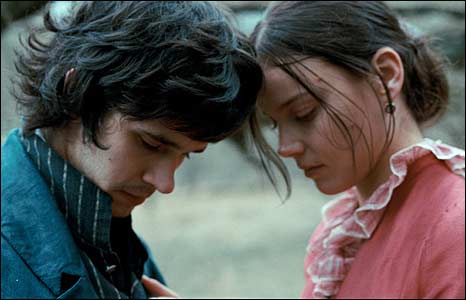
It’s anyone’s guess what the Bright Star of the title refers to. Is it just emulating the title of Keats’ work, is Keats’ talent a bright star or does it refer to Fanny Brawne? – The bright star in Keats’ life. It’s possible for it to be indicative of each of the previous and perhaps even more. Still, Bright Star is a story of an artist, a poet. Even though Bright Star exists more as a study of John Keats through the eyes of Ms. Brawne, I think of Whishaw’s pensive stare whenever I hear the film’s title, even though Abbie’s performance is laudable. I’ve commented on Whishaw’s performance before, and it’s not the typical performance that gains laurels, and Bright Star didn’t catch on with the awards’ bodies at all so his chances of getting recognition were small. But when have I ever been swayed by the awards?
The thing is: I can understand why this performance doesn’t leap out at you. Subtlety has been remembered by critics and audiences before but the entire of Bright Star is crafted in such a low key that save for Schneider’s excellent Mr. Brown no one has the obvious eye catching roles. Of course, that makes their performances so much more treasured. I find it interesting that Ben and Carey are the two 2009 performances that make my list since they have such similarities between them – and not just the British aspect. Something I find provocative in both their performances is their use of expression – the unreadable glances that we often see in people on the streets. And he does need to make good with his expressions because he doesn’t have much time to convince us with words. When Campion does give him the strong lines they’re never thoughts aloud but more symbolic, and the story does leave him to focus on Fanny for long periods. He needs to make his impression felt immediately, and he does – even though he says little. What does Keats think of Fanny on their first meeting as he studies her with his eyes? When he stumbles while reciting his poem at the Brawne home that almost unnoticeable glance at Fanny just before tells us all we need to know. Subtlety.
But he does deliver on his spoken lines too. “The point of diving in a lake is not immediately to swim to shore but to be in the lake, to luxuriate in the sense of water. You do not work out the lake; it is an experience beyond thought.” It’s my favourite line reading of the film, and though it holds potency as written word it becomes so much more profound when Ben says it. He pours so much into his lines and his expressions match. When he tells Fanny towards the end I have a conscience, it is not just a trivial line or steadfastness to some religious oath. We believe that Keats wouldn’t go to bed Fanny, and we don’t doubt or disprove him because for the period before we’ve come to know him – completely – all because of the excellent portrayal of Ben Whishaw. He had an unenviable task, playing a poet that we not only love, but sometimes worship. The saintly connotations are difficult to avoid, and Whishaw delivers.
        
Bright Star has not been wholly loved by you bloggers? And I suppose that it’s not really the story of Keats – but that doesn’t make the performance any less laudable. It’s good regardless of what category you place it in. Right?

Saturday, February 13, 2010

2009 in Review: The Art of Making Art…

...is putting it together. 
                  
Films on forms of artistic ventures are a dime a doze, but I love them anyways. We have cinema to thank for giving us glimpses of so many famous people – the literary kind, sometimes painters, singers so often and this year though it was not quite as abundant it was satisfying. The film that took it the furthest had to be Marshall’s Nine. Nine took it even further than its musical source. In fact the entire Act Two is amended that Nine (the movie) turns into a film about making itself, it’s dangerously tongue-in-cheek and not typical musical territory. A psychological musical? Haven’t heard that one before. Above all else, though, Nine was about the difficulty of creating. In fact Guido’s plight can probably be understood by Jeff Bridges’ Bad Blake. He’s washed up, Guido is too, in a way. So is Adam Sandler’s George Simmons. Bridges is obviously the most sympathetic of the lot. What’s interesting is that each of these artists – the comedian, the singer, the director – tries to reach out to women. The reason Funny People falls flat though is that this very reaching out, though featuring an in form Leslie Mann, seems like an afterthought. The Soloist’s Nathaniel Ayers is not even as lucky. He’s not just experiencing a transition; he’s at the end of his line. I’m a bit surprised no one went for Fox’s portrayal, though it’s not my favourite of the year (not even close) – it’s better than at least two of the Supporting Actors nominated at…, but I won’t go there. The Soloist’s problem is that I’m not sure if it’s Downey Jr.’s journalist story of Fox’s demented man. Still, The Soloist is much better than it’s given credit for, even it’s just a bit too spotless.
                               
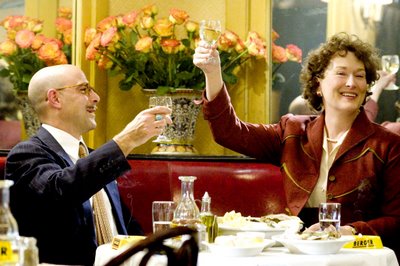
Whereas these three men are grappling with losing their gift John Keats isn’t even sure he has one. It is unfortunate that all brilliant men couldn’t have experienced the brevity their work has had, and John Keats has always been one of the more depressing ones. Next to Charlotte Bronte, he’s probably the writer of the era who least realised the future profundity of their work. Bright Star isn’t really Keat’s story – it’s Fanny Brawne’s – but he is imperative to the success of Bright Star, and Ben Whishaw epitomises all that is John Keats and yet, resists falling into the clichéd traps of the “sensitive man”. Still, I can understand Keats’s plight – like Wordsworth his style was atypical to the age. And on that note we can understand the plight of Julia Child. Whatever my reservations of Streep’s Child may be Julie & Julia works as a satisfying tale of conquering personal demons, of sorts. It’s funny noting how Child finds it so hard to find a place for herself, of course I knew nothing of the woman prior to the film – but it’s interesting note how success is mountain climbed and not a prize discovered. I suppose that makes it all the more worth while.
              
We had a singer, a comedian, a musician, a director, a poet and a chef. Which of these creators impressed you most?

Wednesday, February 10, 2010

A Crazy Heart, A Single Man and a Ridiculously Bright Star

 DON'T FORGET TO PLAY THE GAME!
          
I’ve seen the last three films I needed to before I began my year end awards. I’ve not written reviews for Away We Go or The Imaginarium of Dr. Parnassus – chances are I won’t, in fact the three films identified in the title won’t exactly be properly here, even though two of them deserve mellifluous words. Still, it would be remiss of me not to at least mention them even though they are quite different. Crazy Heart gives us the second coming of Jeff Bridges, or so I’ve heard. It’s the third significant time that an actor is going all musical on us. Jamie Foxx won his Oscar for it and Bridges will probably follow suit, but my favourite of the lot is the unsung Joaquin Phoenix for his real blooded Johnny Cash. It’s strange since Bridges’ has the chance here to create something new, his character is his creation after all. He’s fine, good even, but I wondered why I felt unmoved for so much of his journey since he has the most chance to move me, unlike Whishaw and Firth who must play vignettes.
          
The chemistry exists between Bridges and Gyllenhaal but they seem so comfortable I don’t even feel that they’re trying. Crazy Heart is passable; it doesn’t do anything exceptional, even though I felt it wanted to. In the end it just all felt a bit too artificial, this strikes me as ironic since of the three films it’s the one that tries to be the grungiest, from the costumes to the drawls and the script. Much has been said about the bauble like qualities of Ford’s A Single Man. It’s not perfect, that I will say, and I didn’t fall (completely) in love with it. Nonetheless, it’s a good film with a fine performance from Colin Firth. Still, A Single Man reaches its most poignant when Julianne Moore comes on screen. It’s one of the best performances of the best performances of the last year even though it’s easy to ignore it. It seems like standard Julianne, though it’s not. Her Charley’s wild abandonment with George is only sadder when we see the longing in her eyes that we need not question. She doesn’t get served up a plum role like so many women did last year. Her performance depends on her eyes as does Ben Whishaw’s John Keats. It’s an atypical male performance that unfortunately has gone unnoticed, but I’m not surprised. Audiences often fall into the trap of ignoring reactionary performances like this. But Whishaw's Keats is a revelation abd absolutely perfect. Cornish’s active Fanny Brawne is a thing of beauty, I can’t ignore her striking facial similarities to Nicole Kidman and her quiet line readings are so wonderful when juxtaposed with the moving amber in her eyes. This is her story, and not Keats and she gets the most emotional moment as she finds out Keats death. It is arguably the saddest moment of the last film year and Cornish shines, but she shines brightest when she blushes and smiles imperceptible with Whishaw.
           
It’s interesting that of the three Crazy Heart is the one most remembered in this time of awards praise. But then, it has the most typical female role – the woman behind the man, confident but never assertive. She is not Moore’s nonconforming Charley or Cornish’s modern Fanny. Crazy Heart, forgive me, plays up to the usual thematic elements that some audiences find it so easy to revert to. No surprise that Maggie Gyllenhaal’s turn has gained laurels, it being one of her lesser performances.
      
It’s obvious that Campion’s piece is my favourite then Ford’s stylistic narrative and the Bridges’ star vehicle as my least favourite. Strangely, grading isn’t even that difficult because it’s easy as A, B, C, in that order.
           
PS. See my Best Supporting Actor lineup, a star of the brightest is represented.
Related Posts Plugin for WordPress, Blogger...