Showing posts with label Elizabeth Taylor. Show all posts

Tuesday, May 17, 2011

“I, along with the critics, have never taken myself very seriously.”

This month, courtesy of CS of Big Thoughts From A Small Mind, the LAMB is paying tribute to Elizabeth Taylor. I’d meant to celebrate Ms. Taylor’s birthday earlier this year by doing the usual top 5s, but other responsibilities prevented me. It’s been over a month since her death, but now’s as good a time as any for a retrospective Elizabeth top 5.
    
Angela Vickers in A Place in the Sun (1951)
“Seems like we always spend the best part of our time just saying goodbye.”
            
Elizabeth’s Angela is often forgotten. She didn’t earn an Oscar nod for it, and Stevens film endures less for her contribution and more for its general grace (with the exception of Alice Adams alone, perhaps Stevens films always seem to tower over their actors). Yet, I remember Angela. Elizabeth’s still in that limbo between child prodigy and smouldering temptress and the performance exudes that self-effacing sincerity which I find appealing. And, that final scene is just a beauty.
        
Gloria Wandrous in BUtterfield 8 (1960)
“Mama, face it: I was the slut of all time.”


Maggie Pollitt in Cat On A Hot Tin Roof (1958)
“Maggie the cat is alive. I’m alive.”


Both Maggie and Gloria depend on that vaguely vampish charm which Elizabeth is often remembered for, but for a number of cinephiles they exist on opposite ends of Elizabeth’s spectrum of talent. I love The Apartment, and Shirley MacLaine in it, but I’m always unable to succumb to the general loathing surrounding BUtterfield 8. In fact, other than that ghastly ending I’m a fan of the film itself. Yes, Maggie is significantly more iconic – as is Cat On A Hot Tin Roof I remember them both as fine performances.
                   
Katharina in The Taming of the Shrew (1967)
“Of all things living, a man’s the worst!”
            
Martha in Who’s Afraid of Virginia Woolf (1968)
“You’re flops. I’m the earth mother and you’re all flops.”
            

It is perhaps not accidental that my two favourite performances of Elizabeth are opposite the excellent Richard Burton. For me, Elizabeth’s natural cadence is marked by her ability to go to toe with her fellow actors. She’s not, for example, a Vanessa Redgrave who’s at her best with long monologues. So, it’s only natural with both Martha and Katharina the fact that she has all those combative moments opposite her co-stars contribute to brilliance in the performances.
           
These are only five, but Elizabeth has contributed a number of indelible performances to the screen. Which is your favourite?

Saturday, April 23, 2011

Cinematic Shakespeare, Part Two: The Ladies

I meant to post this yesterday, but alas - I was without internet (horrors). Well, today is the birthday of the Bard so moving on to the excellent women who have done brilliant things because of him.
    
Glenn Close as Queen Gertrude (Hamlet)
Coming off the one-two punch of Alex Fisher and Isabel de Merteuil, I suppose the idea of Close as Gertrude seems liked some outlandish casting from Zeffreli she still emerges as the finest characterisation of the Queen I’ve seen on film. It’s probably her theatrical roots coming to the surface. Gertrude, I suppose, emerges as one of the more ambiguous mothers from Shakespeare. Close manages to retain that ambiguity without making the character too sinister. At her best she manages to sustain that chemistry with Gibson while creating the same with Bates – without making Gertrude seem insincere.

Olivia Hussey as Juliet (Romeo & Juliet)
Olivia looks even younger than Leonardo, which makes her seem to even more of a wise choice for Juliet. As young as the characters are in the play, we often think of them as older and Olivia manages to juxtapose the generally adult desires of Juliet with the more fanciful, youthful portion. It’s an amalgamation that works, especially in the final moments of the film where she’s astounding. As with Whiting, it’s a real shame she never did something as special again.

Helena Bonham Carter as Lady Olivia (Twelfth Night)
On the most obvious levels Helena doesn’t seem like the obvious fit for Olivia, but the entire film is sort of ironic adaptation of the entire film. It’s somewhere between Helen Schlegel and Kate Croy but not anywhere as domineering and she’s easily the best in show – even if she’s not the traditional heroine of the play. To call her comedic skills subtle would be an understatement and despite the more obvious incongruities that exist between her and the character it’s the unobtrusive comedic gifts she uses to define a character who’s not quite funny but is at the centre of comedy.

Elizabeth Taylor as Katherina (The Taming of the Shrew)
I said before, I always think of the Shrew when I hear about Elizabeth Taylor. True, it’s not her best performance but it’s such a fine example of her at her most tenacious – which is what I remember her most for, as an actor and a person. She’s beautiful and terrible and performs with an astounding comedic timing – it’s as if the role was written with her in mind.

Emma Thompson as Beatrice (Much Ado About Nothing)
It only makes sense that the finest female Shakespearean performance comes from a thoroughly British actor. I can’t think of any actor, of her generation, who so seems to so easily encapsulate the spirit of the Shakespearean era. Shakespeare, at its heart, is about its words and Emma Thompson wins easy points for her excellent enunciation. She’s just perfect here.

Later in the afternoon I'll have the closing with a special top 5.
                  
Which of these ladies impresses you most?

Saturday, March 26, 2011

Ten for Tennessee

I love Tennessee Williams. It’s so strange, because he encapsulates most of the things I find exasperating in contemporary playwrights – hysterical characters, overwrought scenes, a consistency in themes from decade to decade bordering on monotony – but I do love him. Aside from Shakespeare, he’s my favourite playwright. What I find odder, though, is that despite an ostensible theatricality to Williams’ his plays make for such brilliant films, moreover – brilliant performances, so I'm celebrating his birthday by celebrating the performances he gave us.
    
I’ve seen seven film adaptations of Tennessee’s work *Cat On A Hot Tin Roof (1958), Night of the Iguana(1964), The Rose Tattoo (1955), A Streetcar Named Desire (1951), Suddenly, Last Summer (1959), Sweet Bird of Youth (1962), This Property Is Condemned (1966) (Baby Doll doesn't count - it's an original screenplay of his.)
                  
Six of these appear on the list below as I make a special top ten, featuring eight actors who owe thanks to Tennessee for eliciting some of their greatest performances: 3 of them leading to Oscars, 6 leading to nominations and one ridiculously snubbed, but still brilliant.

#10 Elizabeth Taylor in Suddenly, Last Summer
I often used to wonder why Elizabeth seemed so “flittery”, and I won’t deny I’m simultaneously awestruck and confused by what Mankiewicz does with the adaptation (more than the play, even). Katharine Hepburn noted in one of her biographies how professional Elizabeth was, and she really does emanate – sort of throwing herself into the role with an endearing way that seems (rightfully) out of place with all the ludicrousness in the plot.

#9 Karl Malden in A Streetcar Named Desire
I have a latent appreciation for Karl Malden, he’s – for the most part – a consistently good actor and it’s a shame that my two favourite performances of his often get thwarted in memory by their proximity to my two favourite Brando performances. In the wake of the hysteria happening in A Streetcar Named Desire the flash of gentility from [ ] is much appreciated. Malden already has that natural cadence that makes him perfect for the role, and he’s such a supporting actor. It’s easy to write him off, but it’s an Oscar well deserved.

#8 Elizabeth Taylor in Cat On A Hot Tin Roof
I often feel a little conflicted about Cat On A Hot Tin Roof, I love it for all its deviations and issues and Elizabeth is a significant part of that. From a literary perspective, I don’t see Maggie the Cat as iconic a character as most Tennessee lovers. Yet, Liz – more than the words on the page, I’d wager – turns it into that incessantly emotive, emotional, explicit and sensual woman that demands our attention.

#7 Richard Burton in Night of the Iguana
The casting of Richard Burton as the defrocked minister who may, or may not, be a drunkard is rich with irony. The performance is something brilliant. As fine as he is in Becket, the fact that Burton neither earned a win nor nomination for this fine performance is just one in a long line of Oscar injustices. Tonally, Night of the Iguana represents a departure from Tennessee at his most impetuous and Burton – who is so naturally conflicted, symbolises that latent unease perfectly. It’s, oddly, not as remembered as you’d think but that doesn’t mitigate its brilliance.

#6 Anna Magnani in The Rose Tattoo
I’ll admit, I’ve actively prayed for Pedro Almodóvar to make an adaptation of this with Penelope Cruz and Javier Bardem, but that isn’t any suggestion that Anna Magnani isn’t powerful. I’ve never seen Magnani in an all Spanish production (I heard she’s masterful in her own language), but if this is her giving an average performance I’m floored. The Rose Tattoo – for me, is Tennessee’s forgotten classic**, and it’s unfortunate that the boorish, mis-casted Reynolds presents a potential blight to Magnani. She doesn’t allow that, though, delivering with intensity – a performance so raw I can’t bear to grudge her for beating out the competition. Ferocious.
 
#5 Paul Newman in Sweet Bird of Youth
I contemplated the logistics of a Tennessee Williams’ top ten without Newman’s work in Cat On a Hot Tin Roof – but as interesting a performance as his Brick is, I’m much more enamoured with his Chance. Chance manages to come off as one of Williams’ brutes who's not really that brutish and it's because Sweet Bird of Youth is - at its heart - not about human nature at its most violent, but at its most romantic. Romanticism seems to emerge naturally, even in the sordidness of that hotel room and a lot of that has to do with how much Newman seems made for the role of Chance Wayne.

        
#4 Katharine Hepburn in Suddenly, Last Summer
Hepburn admitted to feeling the slightest discomfort at the macabre nature of character, and perhaps it’s this occasionally tentative characterisation of hers that makes me much more interested in Mrs. Venable on screen than I do on paper. Suddenly, Last Summer is such an odd film, I can only imagine how odd it must have seemed to the audience at the time. It’s should function as a trio of Monty/Elizabeth/Kate but it’s really Kate/Elizabeth...still, when Kate tackles those monologues – it’s just Kate (which is why I love the first half more than the second).
        
#3 Marlon Brando in A Streetcar Named Desire
I’m an unapologetic Brando fan – even if I’m not that vociferous about it and though he doesn’t top the list, he is my favourite male performance from Tennessee. Forgive, but I’ll never think of Tennessee in tandem with men – his most interesting male remains Tom Wingfield, and I’ve yet to see a cinematic version of The Glass Menagerie. A Streetcar Named Desire is a puzzling piece, not least because it could have so many interpretations – sometimes Brando plays Stanley less as the ogre that some care to see him as, and more as a man trying to tend to the worn illusions of his own family.
        
#2 Vivien Leigh in A Streetcar Named Desire
Someone once pointed out the irony of the very British Leigh representing two of the most iconic Southern-Belles, but it’s all part of the brilliance of acting. More than any of the players in the film, I’d say she gets better and better with age – I do wonder what Tandy did with the role, but it’s difficult imagining anyone else here – Vivien is so perfect. Yes, there's a slight inch preventing me from loving the performance uninhibitedly, but love/like it's a tour-de-force performance. Blanche may not have a strong grip on reality, but Vivien has a strong grip on Blanche and from her most lucid moments to her most heady Vivien delivers beautifully.
       
#1 Geraldine Page in Sweet Bird of Youth
I’d like to think my citation of this performance here as an apology for so often forgetting Page’s work here. I so often forget about the film, actually, even if I consider it to be severely underrated (the film and the play). With her own set of neuroses, the Princess often gets forgotten when considered against the likes of Blanche, Amanda or Mrs. Venable but Page – so beautiful here – is just captivating. I hate she didn't win, but not as much as I’d like to (that 1962 line-up was pure brilliance). Most notably, though, Page avoids the most theatrical pitfalls that could occur in putting the Princess to screen. She’s just captivating to watch.
                          
It takes more than a great role on paper to make a great performance, but there’s no doubt that each of these performances manages to be so brilliant because of their source material. Tennessee may not have written the screenplay for each film but the connection to his original plays is irrevocable. I like to think that his literature will always endure, I’m a literature student after all – and they’re all classics. I’d like to think that these ten performances will (continue to) endure, too. They’re classics as well.
     
* I’ve also seen two TV adaptations, the Jessica Lange version of A Streetcar Named Desire (an enchanting performance in its odd way) and the Arthur Kennedy version The Glass Menagerie. Unfortunately, I haven’t the version of the latter with our lady Kate the Great.
       
** When it comes to readability, I’d pick up The Rose Tattoo or Sweet Bird of Youth first. The former is one of the oddballs in Tennessee’s portfolio, not the least bit Southern, but it’s so quick and rewarding. On the issue of best, I’d debate between A Streetcar Named Desire, The Glass Menagerie and Night of the Iguana, though Sweet Bird of Youth retains a sentimental hold on me, but I’m never certain if it’s brilliant or if I love it too much.
                
This post is quite a mouthful, but as I said – I love Tennessee. Which of these performances inspired his genius endures most for you? Which inclusions surprise you? Do any of his plays emerge as a favourite of yours?

Wednesday, March 23, 2011

The Untamable Shrew

It's not her most revered performance, and it's not the one that we immediately turn to as an encapsulation of her legend. But, when I think of Elizabeth Taylor I immediately think of the shrewish Kate from Shakespeare's The Taming of the Shrew. It's not my favourite performance of hers, but I think of I still think of it as her peak, she's never been more beautiful, more tenacious and more fiery. And, I can't help but think of her eternally opposite Burton - who she stars with here.
RIP Liz Taylor: 1932-2011

Wednesday, July 14, 2010

“Pour Me A Drink, Sugar”

Drunkards – we hate them in real life, but we love them on the screen. One of the many riddles that I cannot answer for you. It’s strange, whether the drunk is a bit of comedic relief, an affable protagonist or a dastardly villain it’s always nice seeing an actor ham it up for our entertainment on the big screen. Making this list was actually difficult, there were a number of notable drunks to sift through (I considered dividing it between males and females) – but in the end, I believe these five are the most notable.
        
#5 Johnny Cash (played by Joaquin Phoenix in Walk the Line)
This isn’t a biopic on overcoming drunkenness, but Joaquin does an excellent job of delving into that territory. I love that morning after where he and all the boys are drunk and Reese’s June turn up. He’s an incorrigible drunk, but he’s also an affable drunk – except when he’s fainting on stage and all. But, I suppose we must take the good with the bad.
     
#4 Blanche DuBois (played by Vivien Leigh in A Streetcar Named Desire)
If Blanche depended on the kindness of any stranger, his name was Jack Daniels. Like many drunks she often tried to hide it, but after her horrid birthday party all bets are off. It’s not so much funny as it is frighteningly unnerving.
      
#3 Terry Ann Wolfeyer…along with Denny (played by Joan Allen and Kevin Costner in The Upside of Anger)
Oh how I love Joan Allen, how I loathe Kevin Costner (but not here). Terry is an ultimate drunk, she drinks alone – which is a bit unnerving, until she gets Denny as a drinking buddy. But she can drink him under the table, anywhere. It could be at dinner, at her daughter’s graduation, just after her husband has “deserted” her – she’ll keep drinking with that same pensive look on her face. That’s what we call dedication.
    
#2 Jack Sparrow (played by Johnny Depp in Pirates of the Caribbean: Curse of the Black Pearl
Sometimes I forget he’s a drunk and just presume he’s crazy. Perhaps, it’s a bit of both. He’s exaggerated, he’s histrionic and he’s a lot of fun to watch. For shame, Disney, what kind of licentiousness are you promoting? I love it.
        
#1 George and Martha (played by Richard Burton and Elizabeth Taylor in Who’s Afraid of Virginia Woolf)
Who didn’t see this coming? It seems I may have to disqualify them; they’re topping too many lists (here, here). I can’t be the only one afraid to pick up a liquor glass after this watching these two having “fun and games”. Just look at the consequences of a nightcap. (Shudders)
  
Honourable Mention to Karen Walker, she’d suck the alcohol from a deodorant stick – if that’s not drunken dedication, I don’t know what is.
    
Which of these drunks would you be afraid to take on in a drinking match?

Monday, June 21, 2010

The Taming of the Shrew: Shakespeare Remembered

Another repost in my TOP 100 entry while I'm away...
...I shall be counting down the final ten soon.
              
I have a penchant for Shakespeare. As far as I’m concerned he’s the greatest writer in the world living or dead, and I’ve always taken a liking to films based on his plays. Some are good and some are not so good, but I am very fond of this particular adaptation. The Taming of the Shrew is one of the best Shakespeare adaptations to hit the big screen. It’s just a really good film – the writing, the direction, the costumes and oh the acting. I’m trying to describe this film and all the words coming to me are superlatives. Richard Burton and Elizabeth Taylor are two of the greatest actors ever and this is their second best collaboration (second only to Who’s Afraid of Virginia Woolf?). The strength of this play lies in the portrayal of the main character Katherine – the eponymous Shrew and Elizabeth Taylor is magnificent in this tour-de-force role. If Hamlet is the best male role Shakespeare ever wrote then Katherine is definitely the best female role.
The story of The Taming of the Shrew is simple. Katherine is the older daughter of Baptista a nobleman of Padua. She is a shrewish and temperamental young woman who vows never to marry. Her sister Bianca is somewhat of a hussy – well as much as you can be in the 1500s. She has countless suitors flocking to her, but Baptista refuses to relinquish his youngest until the older is betrothed…which doesn’t look too likely. A rather brash man shows up in Padua willing to try his hand at wooing at Katherine since she has a respectable dowry on her. What ensues is a string of highly comedic scenes and lots of loud voices with much hilarity. If you know how it ends (and shame on you if you don’t) you’ll know that the ending is somewhat unsatisfying in terms of the women, but I always figured that this was meant to be a satire (like most Shakespeare comedies) and not a realistic outlook on life. And at the end of this movie, there's a shot of Katharine's face that seems very enigmatic.
                        
It’s a testimony to Elizabeth Taylor that whenever I read "The Taming of the Shrew" it is her, and only her, that I imagine as Katherine. You’re probably wondering, is she the only good in the film? Of course not. Richard Burton more than matches her as the cad Petruchio. We already know that they had great chemistry, but it’s really heightened in this film and especially the wooing scene is just a joy to watch. The physicality of both their performances is just engrossing. And with Liz and Richard doing their thing it’s quite hard actually for anyone else to get a noticed. The original play was already working against them because only Katherine and Petruchio have especially strong scenes. However, Victor Spinetti who plays Hortensio – a friend of Petruchio – was memorable in his supporting turn.


It’s kind of beyond me as to why this movie only got 2 Oscar nominations [for Costume and Art Design] I mean, the year wasn’t exactly THAT tough. The nominated the goddman Dr. Dolittle for best picture. What's more amazing is that this movie was shot after Who's Afraid of Virginia Woolf? where they both went the deglam route.
                 
This is #95 on my lists of memorable films, and if you haven't seen it, and many haven't, you should definitely go and check this film out. You won't be disappointed...I hope. In addition to the great acting of the leads, the aforementioned costume and set decoration, this film boasts a melodic comedic score, and beautiful cinematography. Franco Ziffirelli does a good job directing the film, and although it doesn't stick staunchly to the play it's still too much fun for me not to love it.

Wednesday, June 16, 2010

“Why Did We Get Married?”

f there’s one thing the cinema can do, it’s make an impression on you – and one thing that’s they’ve done constantly is make marriage seem like a sick-twisted game. Some couples do it for fun, and some do it because they’re incompatible. It’s a bit crazy when you think of it because if they’re irreconcilable why get married in the first place? Hence the title… (click on the links for thoughts on the films)
                 
Rhett: Frankly, my dear, I don't give a damn!
Rhett and Scarlet from Gone with the Wind (1939)
Of course they’d make the list…they made the other one too. What makes them smarter than the others it that at least they ended their marriage. They realised that this thing was heading nowhere. I still find Clark Gable a bit too audacious at times (am I the only one getting the Clooney vibe…whom I am not fond of) but the paring with the brash Scarlet works lovely even if they end up tearing their heads off in the end.
Reason #5 – don’t get married [The wife will be lusting for another man and the husband just will not give a damn.]
Reason #5 – get married [The wife will never go hungry again…but still the husband doesn’t give a damn…yikes]
         
Brick: How in hell on earth can you imagine you're gonna have a child with a man who can't stand you?
Brick and Maggie (the Cat) from Cat on A Hot Tin Roof (1958)
It’s a bit too different from the play, but I still love it so. I suppose that Elizabeth Taylor is the only one able to completely embody the iconic Maggie the Cat (I often wonder what Catherine Zeta Jones could do with the role). It’s a bit annoying that they pair her clad in a sensation white dress with Paul Newman and they don’t…you know, get it on. But, of course, that’s the entire conflict of the play.
Reason #4 – don’t get married [The husband will withhold sex and the wife will hate your in-laws.]
Reason #4 – get married [Maybe the husband will look like Paul Newman and maybe, just maybe, the wife be hot like Lizze, you can dream.]

Eleanor: I could peel you like a pear and God himself would call it justice.
Henry and Eleanor from The Lion in Winter (1968)
Really, they’re twisted. They move from whispering sweet nothing importants in each others’ ears to pulling out all the stops to make the other cringe. Just when you think they do love each other they turn around and are spitting venom. It’s all very confusing…and then they’re children too, self destructive but oh so lovely to watch…
Reason #3 – don’t get married [The children will hate the parents, the wife will try to conquer her husband’s territory – he’ll jail her and he will pick up with his son’s fiancée and threaten to annul his marriage.]
Reason #3 – get married [The wife will look good even when she’s near sixty, and they both will have a knack for brilliant line readings.]
           
Carolyn: Oh, you don't complain? Then please, excuse me, I must be psychotic, then! If you don't complain, what is this?          
Lester and Carolyn from American Beauty (1999)
Hmmm, they’re just all around toxic. It’s so hard to imagine when they’ve ever had better days. She’s just too neurotic and he’s just too…well, he’s just not interested. It’s a pity, though. Their scenes together are so lovely.
Reason #2 – don’t get married [The child will feel alienated and pick up with dope fiend, the husband will smash plates and lust after teens and the wife will hate him and have an affair.]
Reason #2 – get married [“I will sell this house today”, well that’s what the wife thinks and thus husband will look good naked, or so he hopes.]
               
Martha: If you existed I'd divorce you.
George and Martha from Who’s Afraid of Virginia Woolf (1966)
How could they not be on the list? They’re so twisted and the reason they’re at the top of the list is because they seem to enjoy it so much. It’s like all this violence is some twisted bit of foreplay that they cannot do without out, and it is so brilliant (and brilliant I mean scary and by scary I mean excellent) that I cannot look away.
Reason #1 – don’t get married [They both will be drunks and he especially will despise his father in law.]
Reason #1 – get married [Did you see this movie…? The upside is you die
               
Take your pick. Which spousal argument is your favourite? My favourite is #3, the most dastardly is #1.

Thursday, April 29, 2010

"To Be Or Not To Be…"

...A Shakespeare Lover.
         
Why are people so fond of adapting Shakespeare to screen? I do feel he’s arguably the greatest writer so I have no issues with it, but it’s really interesting how he’s adapted and then re-adapted and then adapted again, just for good measure. The man sure has left behind a legacy. Two films I’m anticipating this year are Shakespeare adaptations. The first is Julie Taymor’s The Tempest. I like, but don’t love, The Tempest and I’m not too enamoured with Taymor’s decision to change the sex of Prospero (even if the lovely Helen Mirren has been given the reins). The second is an updated version of Coriolanus, a play I’ve never read (but I’ve never been overly fond of his histories). But with Vanessa Redgrave and Ralph Fiennes, I don’t see how I can say no.
            
I can’t say which adaptations of Shakespeare’s work are my favourites, although this list does pretend to be about that. But five incarnations come to mind immediately when I think of Shakespeare on film.
      
Hamlet (1948)
Olivier’s Hamlet has its issues, a number of them actually, but I’m always willing to forgive them – like Jean Simmons’ simpering Ophelia, Olivier’s obvious oldness, Herlie’s obvious youth – because it all comes together well. The film depends so much on the foreboding atmosphere, and with the black and white and the misty screen it’s so reclusively tense we can’t help but spiral down with Hamlet as he takes his journey. I guess, it did deserve it’s Best Picture win.
  
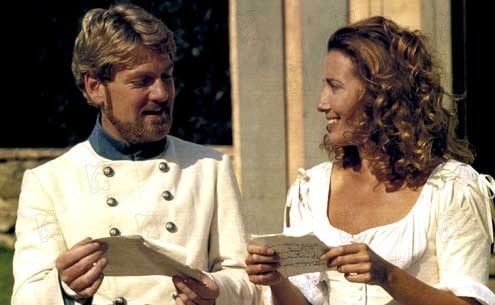
Much Ado About Nothing (1992)
Branagh and Emma Thomson sizzle on screen as Beatrice and Benedick, and though this too has its faults (Keanu Reeves, ugh) it’s all done well. I’m actually not a big fan of the actual play, but unlike many pieces it translates excellently to screen. I guess reading it can never compare to seeing it acted and Much Ado About Nothing doesn’t shirk on the joy of it all. It boasts one of Emma's most delightful performance, it's a pity it's become forgotten...
            
Twelfth Night (1996)
...forgotten like this, another Branagh piece. I always remember the lovely Helena Bonham Carter with affection in this. Twelfth Night is my favourite Shakespeare play (an odd choice, I know), it’s perhaps my favourite play – period. There’s just something irresistible about the nuanced nature of the characters and the ridiculous machinations of the characters as subplot after subplot develops leading to perfectly delight conclusion. Imelda Staunton and Ben Kingsley too are worthy of remembrance. I can’t say why Branagh’s film has become so forgotten…
       
The Taming of the Shrew (1967) (my review)
This film actually makes an appearance in my top 100, but has anyone seen it? This is Richard Burton and Elizabeth Taylor with the most chemistry between them. It’s sheer joy to watch them play excellently off each other in this farce piece. It may probably be a bit too irreverent for Shakespeare worshipers, but I’m sure that he would have enjoyed it for the sheer fervour with which they attack the lines.
           
Romeo & Juliet (1968 (my review) 
This is actually quite a simple choice. As I mentioned in my review of it, it’s close to perfection. Leonardo Whiting and Olivia Hussey are astounding as the eponymous characters and the ensemble cast backs them up well. It’s not at all maudlin and just as excellent as the original. I’m uncertain if any Shakespeare incarnation could ever top this?
            
What do you think? Is Zeffirelli’s take on the greatest love story a paragon of its genre as I believe, or do you have another favourite?

Thursday, April 22, 2010

"All In A Day's Work"

Entertainment Weekly is always up and about making lists, and I always end up having severe issues with them. Their most recent is one on the best films that occur within 24 hours. They've got some fine choices there (Ferris Bueller's Day Off, America Graffiti) but they really missed the ball on some rather obvious choices. So, I've done my duty to make my own list - my top 5 films that occur in a day. I'm not ranking them on merit, but on how well they incorporate the one day theme...


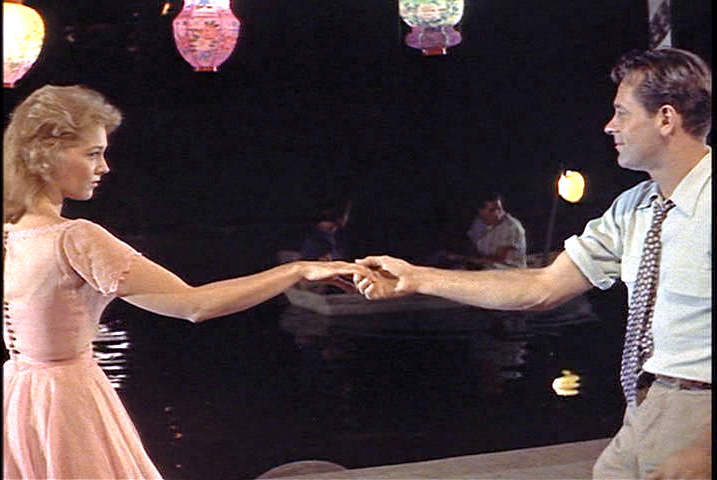
#5 - Picnic (my review)
I don't particularly grudge them for not including this on the list, it's not really a popular film. Still, it's a favourite of mine somewhat. In Picnic Hal (played by William Holden) - a good-looking good-for-nothing shows up on the day of their Labour Day Picnic and rocks the town. It's based on the Pulitzer Prize winning play by William Inge and features an ensemble cast with Kim Novak and Rosalind Russell. I suppose Picnic can get a little sentimental at times, but that's part of its appeal I think.
         
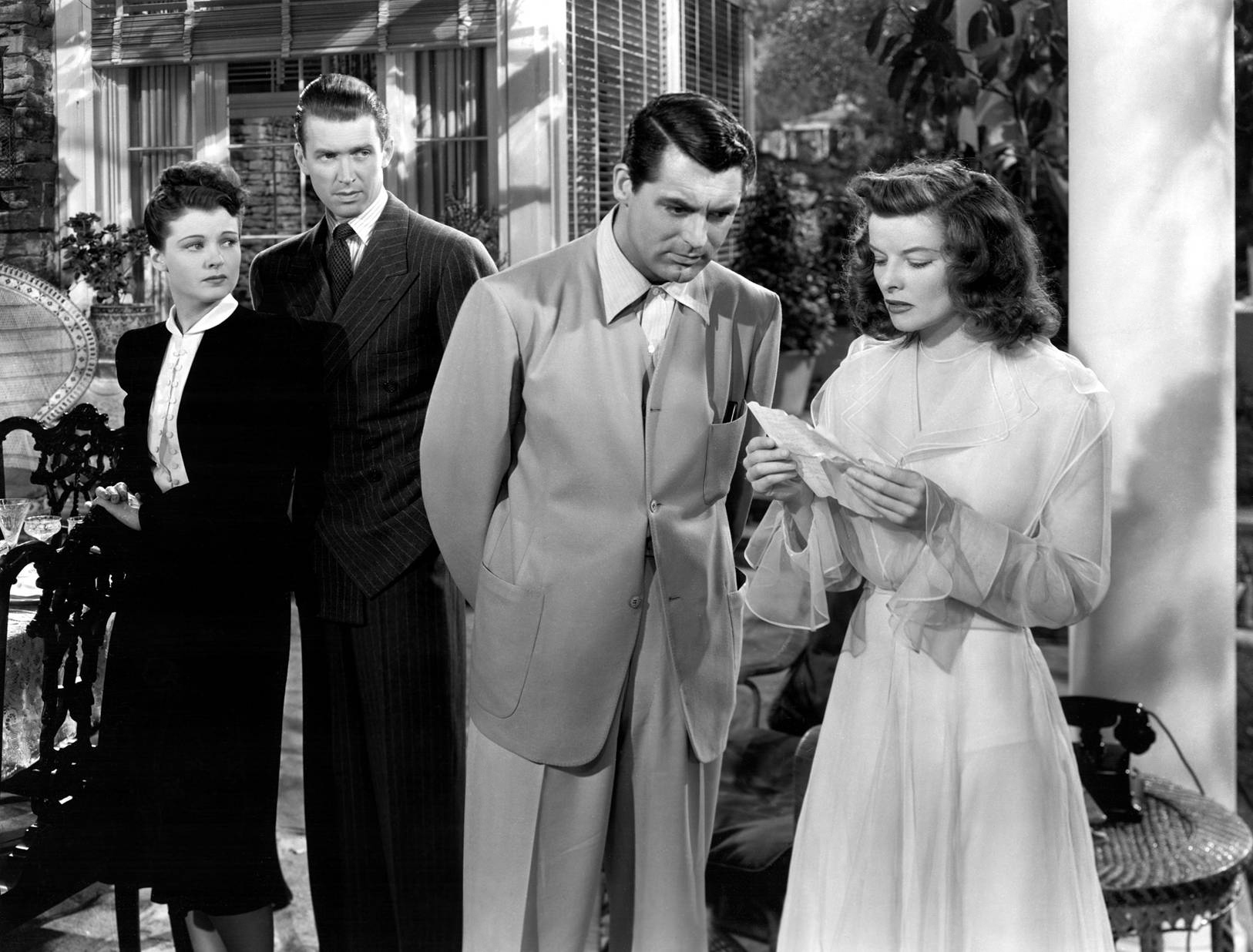
#4 - The Philadelphia Story (musings on Kate)
I suppose this doesn't really happen in a day, which could explain why this classic piece is missing from the list. It begins with a prologue and then flashes forward to the morning before Tracy Lord's (Katharine Hepburn) wedding. As the day unfolds she's torn between her fiancee, her ex-husband (Cary Grant) and a newsreporter (James Stewart). After a night of craziness she comes to the right decision in the morning. The film doesn't happen in a day, but it happens in 24 hours - so I say it's eligible. And this one's based on a play too...
             
#3 - Cat On A Hot Tin Roof (my review)

Trust Entertainment Weekly to ignore Liz Taylor at her sexiest. In a nutshell, it's about a woman who's trying to convince her husband to sleep with her while her father-in-law may (or may not) be dying and the vultures are gathering around in anticipation the will. It's a depressing film, but Tenneessee Williams excellent writing makes it very accessible and Taylor and Newman give some scintillating performances. Classic...and based on a classic piece of literature too.
     
#2 - Guess Who's Coming To Dinner? (my review)
It almost topped the list, and with good reason. It has its haters, but this film really makes excellent use of the one day plot point. Mr and Mrs Drayton (Katharine Hepburn and Spencer Tracy) are a white couple who love all races, but they're still somewhat surprised when their daughter Joey (Katherine Houghton) brings home a black man 14 years her senior hoping to get their blessings. The conondrum is that Dr. Prenticehas to leave tonight, so time is of the essence. Guess Who's Coming to Dinner isn't exactly perfection, but it is enjoyable, smart and classic.
        
#1 - Who's Afraid of Virginia Woolf? (my review)
 
What an egregious snub. This film doesn't utilise the full 24 hour, it doesn't even use twelve. This one's based on a play too, incidentally. Martha and George are two sadists (Richard Burton and Liz Taylor). He's a college professor, she's his wife and the daughter of the dean. They may, or may not, have a child. They invite the new young professor and his wife (George Segal and Sandy Dennis) for a night of fun and games. We get games, but not so much fun. After seeing this you'll probably want to stay away from marriage and from liquor, I know I did.
                     

What have we learnt? Entertainment Weekly needs to get better list makers, I like way too many classics, and plays are the best source material for film. All in day's work.
Related Posts Plugin for WordPress, Blogger...