Showing posts with label An Education. Show all posts

Friday, August 20, 2010

The Spin-Off, Season One: Episode 1

When I mentioned a couple of months ago that I felt that there was eons of story beneath the characters in An Education it was Mrs. Mellor, played excellently by Cara Seymour, that stood out the most. Remember that moment when David stops in for a drink and Marjorie says, laughingly, of her past life “I’m trying to think what you missed. Nothing much comes to mind.” It’s little moments like that that get me thinking about Marjorie Mellor as a real person and not as a plotpoint in An Education of Jenny Mellor. And, really, wouldn’t that be a capital film. Sequels, spinoffs and reinterpretations are a big no-no right now, cinematically speaking. The thing is, the reason those end up doing so poorly is because there’s really nothing new to be seen. Same story, different protagonist. Sure, the convoluted action flick might be a moderate smash at the box-office…but it’s more than just about the money. Right?
It would be a whole other kind of An Education if we could see Marjorie as a young Briton in the forties. I did say she reminded me a bit of a Helen who’d taken the high road. Thus, who better than the actual Helen to play her? Rosamund Pike has been doing too many thankless supporting roles. She needs a leading role worthy of her brilliance. Bring back Lone Scherfig to direct and Nick Hornby to write the script and we could have a winner on her hands. How did Marjorie end up with her stick-in-the-mud husband? Granted, it’s anyone’s guess if Jack was always so uptight. And who to cast as the resident fuddy-duddy? Matthew McFayden, no less. He’s not as deliciously histrionic as Alfred Molina (who is?), but he’s a “safe” choice – the type of affable man who feels he is not good enough for his wife. Am I the only one getting the feeling that Mr. Mellor is well aware that he’s a lucky bastard for catching Marjorie? I love that moment near the beginning where Jenny’s asking for directions to St. John’s Smith Square and Marjorie says, “It’s in Westminster. Just around the corner from the Abbey.” Jack does the slightest of double takes, “How d’you know that?” Marjorie is unaffected, “I had a life before we were married, you know.” No passion – just a fact. Cara Seymour is just perfect in her role…and that only gets me wondering more, was Marjorie a prominent socialite?
I don’t quite know what the plot would focus on. Was she born in Twickenham? Did she always want to be a dutiful housewife? Perhaps she was a nurse during the war. Or perhaps she had hopes of becoming an actress in her day that were thwarted by a love affair with the amicable, if somewhat trite, Jack. Yes, my brain’s just hopping around but that’s one spinoff I’d pay good money to see.

Am I barking up the wrong tree, or would your interest be piqued at the idea of a prequel for Marjorie Mellor? Rosamund and Matthew…or someone else?

Wednesday, August 18, 2010

Movie Meme, Day 18: Favourite Title Sequence

Though I understand what a title sequence is, I wonder if end credits count. I was uncertain and didn’t wager to research (any musical with Rob Marshall or Bill Condon would win that battle). I’m not too interested in title sequences; they don’t really determine the film either way. I actually like when films are excessively sparse with title sequences – like The Departed or Atonement. All we get is a single title card that’s superimposed (or in the latter’s case – typed) and the film continues. Simple, effective and without pomp or scene.

That being said a nice jaunty title sequence does work – An Education and Down with Love come to mind. There’s the cheerful music, and the humorous sequences – it lifts your mood and you’re not even sure what the movies are about as yet. Then – there are the more sombre ones. I continue to hail last year’s Coraline is a testimony to animation for, for children and adults, done right and I love the title sequence. The needle makes the doll as the solemn music plays and we get a glimpse out into the night sky, and that aspect of creation reminds me of The English Patient – another sombre opening. We spend a good five minutes at least watching a paint brush work its way across a surface. When it was one of my banners, Castor was so kind as to compare it to pee stains from a dog…not quite. Eventually (if you watch the film) you’ll know that the paintings are of a fateful cave, but we know it’s something sombre nonetheless as Gabriel Yared’s brilliant score plays overhead. It’s simple to ignore title sequences but, whether it’s a single shot (sometimes brevity is important) or an elongated sequence they do have their significance, I suppose.   
         
All for the MEME (automated posting).

Tuesday, August 3, 2010

Movie Meme, Day 3: Favourite Oscar Nominated Movie 2009 / 2010

No need to worry Carey...you're on the list...
This was another outrageously simple day in the meme. Anyone reading the blog from December to June would have seen me going all crazy for Carey Mulligan and An Education. It was my favourite film of the last season, although recently the #2 of the year has been edging closer and closer to the top spot. Right now it’d be a tough choice for me to choose which is my favourite – hence, I’m featuring both today.
...You too Ben...
I have a bit of an unusual appreciation of British films (or at least, British actors) so the #1/#2 status of An Education / Bright Star is not exactly astonishing, for me at least. In my extremely nepotistic (naturally) personal awards canon the two films were my favourite for acting (Whishaw and Schneider of Bright Star, Mulligan of An Education), writing (screenplays for both), song (An Education), score (Bright Star) and runner ups in a host of other ones (including Molina and Pike from An Education and Cornish from Bright Star). Just in case you don’t know what they’re about…
        
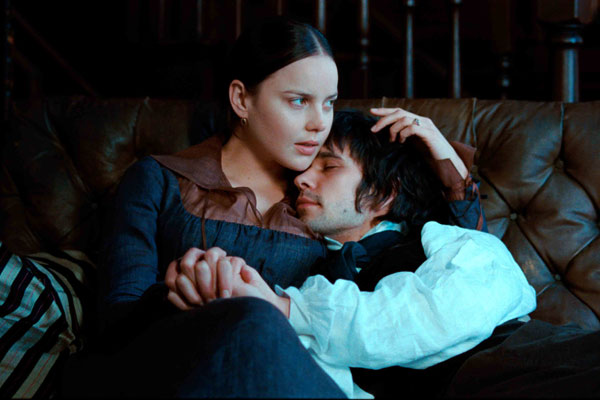
An Education (complicatedly, and inadequately, reviewed) is a coming-of-age pseudo drama about a 16 year old school girl in Twickenham, England. And Bright Star (semi-reviewed along with A Single Man and Crazy Heart) tells the story of the last few years of John Keats – poetic royalty – life. Both films garnered most notices (Oscar aside, grrr) for the performances of their leading ladies and considering that Carey and Abbie were one / two in my Actress profile of the last year – the accolades weren’t underserved. I mentioned Carey’s turn in my Performances of the Decade feature as I did with Ben Whishaw (as the eponymous Keats). Both actors have a knack for expert facial expressions. I’d love to see Abbie, Ben and Carey in a movie together.
Technically, there’s little that’s similar between the two – but it’s odd how Cara Seymour and Kerry Fox both give brilliant (albeit short) supporting turns as the mothers of our heroines, and Paul Schneider and Alfred Molina (#1/#2 on my Supporting Actor List) were unjustly ignored for performances that seemed overwrought but were more expertly executed than some seemed to realised. There’s also the fact that both pieces were directed by women. Sure, Kathryn Bigelow was the woman everyone was going wild for last year, but it’s a pity Scherfig and especially Jane Campion couldn’t be more appreciated for their contributions (Campion also wrote the screenplay).
I’ve gotten over Oscar’s fickleness, I'm okay with the fact that Bright Star managed to get only one Oscar nomination and that together the two films won 0. Right now, I'm just glad that 2009 offered two (and more) excellent films. whenever I do eventually revamp my top 100 list to include recent films I’m not sure if An Education or Bright Star would come out higher – but they’d both be there. I do love them both...
           
Which do you prefer?
       
And herein ends another day of the MEME…

Wednesday, July 14, 2010

Decade in Review, Revisited: The Screenplays

Screenplays are different from the actual films they precipitate. Quite often the screenplay ends up being my favourite of a film. It all begins with the screenplay really – here are the ones that I remember most clearly from the last decade.
Runners Up: (Alpha): Big Fish* – adapted (2003); Bright Star* – original (2009); Brokeback Mountain – adapted (2005); The Constant Gardener – adapted (2005); Corpse Bride* – original (2005); The Fantastic Mr. Fox – adapted (2009); In the Loop – adapted (2009); Little Miss Sunshine  – original (2006); Mean Girls* – adapted (2004); (2009); The Others* – original (2001)
       
#15: A History of Violence (2005), adaptation by Josh Olson
Richie Cusack: “So you like that farm life? Milking cows and shit?”
Tom Stall: “I don't have a farm.”
Richie Cusack: [chuckling] “No? Fogarty thought you lived on some kind of farm. Said you could smell pig. How that old fart would know what a pig smells like, I don't know, but that's what he said.”
Visceral is not a word I find myself using often, but it’s the one that comes to mind immediately when I think of A History of Violence. It approaches an issue – a character with two sensibilities – in a manner that’s unorthodox and also quite sanguine. Its aim is not to shock, at least not unwarrantedly. In approaching the concept with such smoothness Tom Stall becomes a symbol for any man.
     
#14: Chicago (2002), adaptation by Bill Condon
Billy: “When she returns, she gently wakes up Harry. Harry says, "What? I'm alone." She says, "Alone? You got two other women in bed with you ." So, get this. Harry says, Come on , doll . You gonna believe what you see or what I tell you?”
Marshall is not credited, though a significant amount of the idea emanates from him. Still, Condon does excellent here. He doesn’t get overwhelmed by Ebb and Kander’s standards and forget to make sure they’re resting on a dependable set of words. He raises the standard ensuring that the every scene exists as it should and the spoken scenes succeed as much as the musical ones.
        
#13: You Can Count on Me (2000), originated by Kenneth Lonergan
Terry: “Where are we going?”
Sammy: “To pick up Rudy.”
Terry: “What, do you not even want me to come visit now?”
Sammy: “Of course I want you to visit, you idiot! I've been looking forward to seeing you from the moment I got your letter, I told everyone in town that you were coming home, I cleaned the whole fucking house just so it would look nice for you! I had no idea you were just broke again! I wish you'd just send me an invoice!”
A bitingly realistic and poignant look at filial love, it’s easy to forget and just see the excellent work being done by Ruffalo and Linney. Longergan crafts his screenplay with a surprising lack of pretentiousness, and even when we might hope for something a little more “movie-like” she’s careful to ensure that her characters are acting in keeping with the world he’s created for them.

#12: Babel (2006), originated by Guillermo Arriaga
Yussef: “I killed the American, I was the only one who shot at you. They did nothing... nothing. Kill me, but save my brother, he did nothing... nothing. Save my brother... he did nothing. ”
It’s simple to ignore because of Crash, which it’s mistakenly seen as a derivative of. It does tend to get a little bit too heavy-handed when delving into its symbolism but I forgive a few of its occasional missteps because in the greater realm of things I do treasure its ultimate result. The balancing between the three narratives is handled gracefully; and the message though obvious is not less profound for it.

#11: Traffic (2000), adapted by Stephen Gaghan
Caroline: “On the good days, I feel like I get it, like it all makes sense. I can stay in the moment, I don't have to control everything in the future, and I believe everything is gonna work out fine. On the bad days I just want to grab the phone and start dialing numbers. I want to pull my hair and run through the streets screaming. But thanks to the people I've met in these rooms, like Margaret and Jim and Sarah, I'm pretty sure I'm gonna make it through today.” 
Another massive ensemble drama, Traffic depends significantly on its screenplay. It's riveting and it flies by, but it's also incredibly smart. Gaghan has an ear for dialogue, especially topical dialogue, and the script serves as an excellent appraisal of current affairs.
     
#10: Erin Brockovich (2000), originated by Susannah Grant
Erin: “I've been working, that is all I have been doing, what am I supposed to do check in with you every two seconds?” 
Brenda: “Yes, it's called accountability and...” 
Erin: “I'm not talking to you, bitch!”
Brenda: “Excuse me?” 
Erin: “Get out of my face!”
This is another one that’s often overlooked. Grant takes a concept that’s almost pedestrian – the hardworking heroine against the world – and creates a screenplay that’s uncluttered and not at all condescending. We forget at times that at the end of the day this film is ultimately a legal drama, because Grant is willing to touch on more than just a single issue in her script.
    
#9: An Education (2009), adaptation by Nick Hornby
Helen: We should go shopping together one day, if you want.
Jenny: That would be nice. But South Ken, C'est beaucoup trop cher pour moi.
[Pause]
Helen: Sorry?
Jenny: I just said...It was too expensive for me.
Helen: No you didn't. You said something completely different.
Hornby has the admirable ability to push a host of ideas into a particularly short screenplay. Moreover, though it ostensibly focuses on something as singular as a girl’s “coming-of-age” each character, regardless of their relative importance, speaks words that are completely their own.

#8: Match Point (2005), originated by Woody Allen
Chris: “The man who said "I'd rather be lucky than good" saw deeply into life. People are afraid to face how great a part of life is dependent on luck. It's scary to think so much is out of one's control. There are moments in a match when the ball hits the top of the net, and for a split second, it can either go forward or fall back. With a little luck, it goes forward, and you win. Or maybe it doesn't, and you lose.” 
On the surface it’s just Woody Allen’s perverse take on a classic tale, but underneath it’s a thoroughly original and almost subversive take on people in the world. It stings as much as it amuses and when you think it’s a trifle there’s always something deeper lurking below – if you’re willing to look closer.
      
#7: The Departed (2006), adaptation by William Monahan
Uncle Ed: “Are you trying to prove something to the family?”
Billy Costigan: “When you say "the family," who do mean exactly? You?”
Uncle Ed: “You always have to question everything, don't you?”
Billy Costigan: “Maybe it would have done you some good to have some *questions* from time to time, you know? Am I an asshole? Are my kids a mess? Is my wife a money-grubbing whore? I mean, those are questions, right? Have I ever been good to my dying sister or am I just now pretending to be?”
Monahan’s adaptation of the Asian drama is a beast of its own. Complete with little character idiosyncrasies that are all his Monahan’s piece is completely original – adaptation or not. The world he creates is probably fabricated but everything that occurs is rendered believable simply because of the sameness throughout the narrative.

#6: Burn After Reading* (2008), originated by Ethan and Joel Coen
Osbourne: “And you're my wife's lover?”
Ted: [shaking his head] “No.”
Osbourne: “Then what are you doing here? [pause] I know you. You're the guy from the gym.”
Ted: “I'm not here representing HardBodies.”
Osbourne: “Oh, yes. I know very well what you represent. [pause] You represent the idiocy of today. ”
This remains as one of the most inventive comedies of the decade, and the script is one of the decade’s best. The entire thing is permeated with a glorious amount of irreverence that doesn’t stop the harsh truths in the screenplay from being seen. It’s the very fact that it doesn’t take itself too seriously though, not caring to sentimentalise any of its characters.

#5: Atonement (2007), adaptation by Christopher Hampton
Robbie: “Dearest Cecilia, the story can resume. The one I had been planning on that evening walk. I can become again the man who once crossed the surrey park at dusk, in my best suit, swaggering on the promise of life. The man who, with the clarity of passion, made love to you in the library. The story can resume. I will return. Find you, love you, marry you and live without shame.”
Not as piercing as his work on Dangerous Liaisons, but done with the same amount of astonishing brevity. Like any such adaptation the script is littered with bits of symbolism here and there, and it must have been a task creating a screenplay from McEwan’s impressive novel. He doesn’t quake at the challenge, though, and the story works well on its own.
       
#4: The Hours (2003), adaptation by David Hare
Laura: “It would be wonderful to say you regretted it. It would be easy. But what does it mean? What does it mean to regret when you have no choice? It's what you can bear. There it is. No one's going to forgive me. It was death. I chose life.”
I’ve not read Cunningham’s novel, though I’ve read extensive biographies on Woolf and Mrs. Dalloway. The screenplay exists seamlessly; there are three women but it is one story. Oddly, it never becomes too “talky”, the dialogue is never obtrusive. Instead everything flows together in beautiful subtlety.

#3: Before the Devil Knows You’re Dead* (2007), originated by Kelly Masterson
Gina: “When are you going to grow up, Hank? We have a really good thing going, and you should just enjoy it. We have a really good time in bed. I don't ask for anything.”
Hank: “I love you. I want more.”
Gina: “So does Oliver Twist.” 
Masterson’s script is discordant, but that's the beauty of it. Such a tale could easily have become a message film, instea she turns it into a nuanced character study giving every character their pivotal moment – and ensuring that plot points that occur are readdressed. She refuses to conform to the norm creating a world that is completely hers.
     
#2: Eternal Sunshine of the Spotless Mind (2004), originated Charlie Kauffman with Michael Gondry
Joel: “I can't see anything that I don't like about you.”
Clementine: “But you will! But you will. You know, you will think of things. And I'll get bored with you and feel trapped because that's what happens with me.”
Joel: “Okay.”
Clementine: [pauses] “Okay. ”
It’s an obvious choice, but deservedly so. It is a work that’s strikingly original even though the issues are ones we know all too well. Ostensibly it seems to be science fiction, but that solitary plot point is just that, and the issues addressed are done so with some of the most perceptive and smart comedic writing.

#1: Gosford Park (2001), originated by Julian Fellowes with Robert Altman
Sylvia: “Where's that wretched Mabel.”
Aunt Constance: “Has anyone checked her outfit? She's probably in black velvet with a feather in her hair.”
Lavinia: “She's in the morning room looking perfectly normal. Don't be such a snob aunt Constance.”
Aunt Constance: “Me? I haven't a snobish bone in my body.”
So subtle and yet so intense, addressing serious issues and yet so hilarious it’s a choice that comes easily – almost too easily. The ensemble drama gives the writer much ground to cover, and Fellowes does it with aplomb. He travels upstairs, downstairs and back again – but never tries too hard. Character development is vivid, but sometimes subtle we need to look (and listen) carefully…and just when you think you can put it in a box, he’s waiting to add something to new. Perfect.
     
Twelve originals and thirteen adaptations make up my twenty favourite screenplays. The ones with asterisks (seven) were, unfortunately, ignored by the Academy.
     
Which screenplay from the last decade would you want to take credit for?

Thursday, June 24, 2010

The ReEducation of Andrew:…or How I Never Learned to Write a Review

Remember, An Education? Of course you do. Care Mulligan’s coming of age in London from Lone Scherfig that I fell deeply for… I’m still deeply rooted in my affection for An Education even if I never mustered up the time to critically review it (not here, not here, not here not even here). It’s nice to see that “education” fever is still in the air though, I’ve been reading more and more reviews of it and the most recent one struck me as well written (though I disagree with so much). Carson of the very intelligent Are the Hills Going to March Off (how have I never heard of this blog?) gave it quite the tongue lashing a few weeks ago that made me give my kneejerk long-ass comment, which immediately reminded me of what I said after just seeing An Education. I have a feeling that it strikes me so much because it seems like something that I would see happening. No I do not live in Twickenham (or England) and I do not attend (and never have attended) a girls’ school or private school, still it struck me as all very natural and more importantly – personal.
I noted that the opening credits before as particularly jaunty and irreverent (remember this post; I never got around to posting my favourite endings, but all in due time). When I watched it a month ago with some friends and my two sisters a friend of mine who had seen snippets of the middle asked me, “Is this the same film?” I guess the opening credits are misleadingly, but I still applaud Scherfig’s choice. There is only one scene in An Education I’d admit to disliking in particular, and that’s the one just after the credits – not that the cello conversation – the residual snippets of Jenny in class. I do love how Carey sits up to answer about Mr. Rochester (I really don’t like Jane Eyre) but it seems too much like hitting us over the head. Do we have to open with Jenny showing up her schoolmates? Incidentally…that was probably me in high school. I did love English Lit. But this isn’t sounding review-like, is it? I know. An Education has that effect on me.
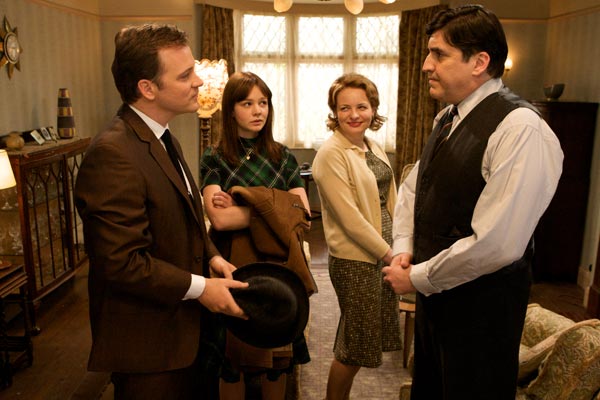
For the record, I’d like to say that I think Cara Seymour is excellent here, as time goes by I’m wondering if she’s my favourite supporting player in the film (including Pike, Molina, Sarsgaard, Cooper, Thompson and Williams). On that note, how much people are in this movie? It seems as if it’s just about Jenny but the characters exist in their own realm, sans Jenny. It’s not a situation where I don’t buy them as realistic. These persons are all real, and I can imagine them before and after Jenny. Ah yes, but I was speaking of Cara Seymour. She has a knack for winsome facial reactions (like mother, like daughter) and even in that first cello scene that’s all Mulligan vs Molina I can’t help watching her. She’s like a Helen who has taken the highroad…and settled down. That single moment of her having some alone time with Jenny where she scrubs the spot is too short, and really An Education is just too short, I wish we had more time with her. Dare I say – sequel? She’s such an obvious mediator; like at Jenny’s “party” where Graham has his fateful exit, (remember Matthew Beard?) she’s just realistic, with that bland looking sponge cake and all. Yet, she’s not particularly meek in the face of her husband. Of course we all balk at Alfred Molina (unless we’re Vianne and opening a Cholaterrie during Lent, but I digress) but even when she’s following his orders Seymour always has that exasperated look on her face that’s mixed with amusement. Maybe it’s because I’m reading it at the moment but her dedication to her husband strikes me as similar to Linda’s faith in the misguided Willy in Death of A Salesman.
We look so good, and he still hasn't mentioned me.
                   
More than a few people have confessed to being less than impressed with Scherfig’s blandness in direction which is a sentiment I can’t help but be puzzled at. I think of the indulgency of Daniels in Precious and wonder why his indulgence is fine because it’s in-your-face. I don’t doubt, though, Scherfig may do well with a light romance (circa 19th century). I’m no fan of overused close-ups, but she thrives when she has all her actors in a room. Like the first table meeting of the three musketeers and Jenny, or both of Graham’s visits to the Mellor house. She knows who to cut to and when, even if we don’t and gets the reactions that are not at all studied. With expression, I of course turn to Carey because she like making faces. Really, I can’t say that Audrey comparisons strike me…I suppose they do have that same pixie look, but when it comes to expressions she reminds me of the other Hepburn. Not in physicality, per se, but in that way that Kate is termed a self-conscious beauty – isn’t Carey the same? Who knows? Perhaps she’s cold and calculating and is just an excellent pretender…but she definitely pulls the wool over my eyes.
My A-Level papers were better than this review
                    
I suppose I must examine that final “prosaic” monologue of A-Level studying, but I have no issues with the choice. Is it really too much to give Scherfig credit, juxtaposing Jenny’s earlier days of reckless abandonment (almost) against the extreme triteness (ostensibly, at least) of studying? Naturally if I take that route I’ll eventually meet up with the roadblock of the film’s contrasting messages. But I don’t find it worrisome (or even evident). Jenny’s obviously going to be learning from her education with David, and not just those pedestrian ones like being careful with men. Is it too much to take her final monologue seriously? Sure, she seems as wide-eyed and tasteless as all those other girls; but she’s had a taste of the other side. And neither is superior to the other, but Jenny knows who she is. As she makes that visit to Mrs. Stubbs and looks around the room with the placid decorations she realises that, perhaps, that’s all she’d ever need. After all, this is the education of Jenny…not Helen.
There… a thousand words and I still haven’t reviewed it (or talked about the excellence of Dominic Cooper). Tut, tut, tut. My writing teacher would balk at this plethora of words with no structure. I guess I’m just unable to review it....It's still an A for me, though.
                  
Get educated yourself…these bloggers actually knew where they were going with their reviews. I do like reading people's archives...
Andrew (not me)

Friday, May 28, 2010

Why so sad, Carey? It's your birthday...damn it!
Now that's more like it!

Wednesday, May 26, 2010

Discussing Fish Tank

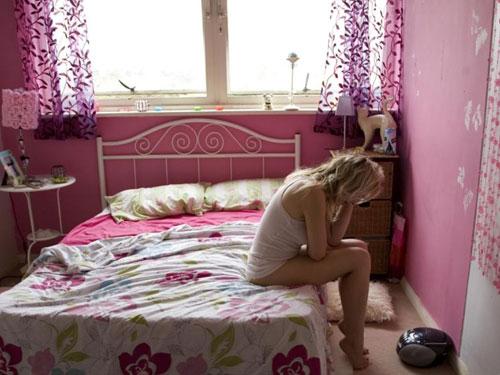
I’ve been hearing about Fish Tank for months. More often than not, it was through the words of an enthusiastic reviewer of the film. In fact, a number of important people (important to me, at least) were generally positive about it  like Jose, Hatter, Tim, Nick. I’ve seen Fish Tank for some time now, but nothing’s coming. What is Fish Tank about? A sixteen year old girl, and would-be dancer, meanders through life culminating in a crush on her mother’s latest boyfriend. I can’t write about Fish Tank, or rather my issue with it without revealing plot details so SPOILERS ABOUND. Be warned.
I also can’t talk of Fish Tank without thinking about An Education – I film I fell for last year. Both films are directed by women, both focus on a sixteen year old Briton, both girls fall for older married men and both girls believe in the infallibleness of their brains. Of course, they differ in styles – completely. An Education sedateness (often mistook for unoriginality) differs starkly when measured againt Fish Tank’s shaky camera and general penchant to impose itself on us, almost like a real person. I don’t have an issue with the style, but truthfully I’m confused as to why Arnold’s choice of shooting in “real time” makes her such a wonder. To be certain, she is skilled equally as a writer and director, but she’s far from flawless on both counts. During the film, I was often moved to doubt the validity of these characters. It’s ironic, really, Fish Tank prides itself on being as authentic as can be but I often felt it to be just as pretentious, at times. Incidentally, it’s an issue I had with Precious - sometimes in her predilection for showing the harsh reality Arnold comes off (to me) as someone intent on shocking us and failing to attach it to any narrative progression. Furthermore, a particular scene in the marshes though ostensibly thrilling does nothing that makes it particularly necessary to the narrative as far as I see.
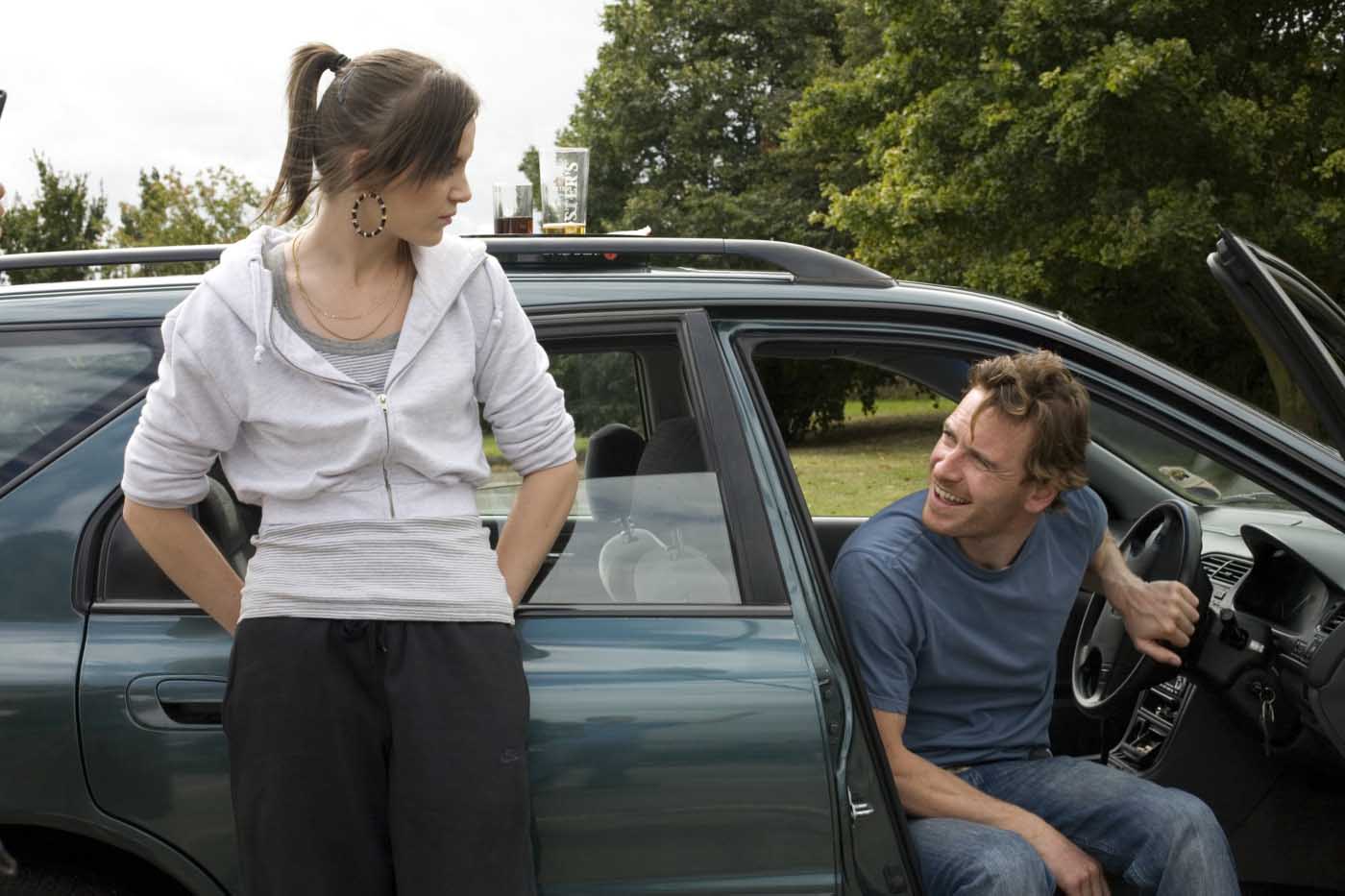
It’s crass to focus the entire review on finding fault with Fish Tank since it’s not wholly without accomplishments. Jose was quite enamoured with Fassbender’s performance, and he is good. But my issues with the narrative prevent me from being particularly moved by him. It’s to his credit, though, of the entire cast he’s the one who’s able to portray the most while saying the least. He has a knack for adroit facial expressions which few actors could profess to. We know what he’s up to even before he makes any noteworthy decision to do it. Moreover, he manages to prevent himself from becoming a villain just as Sarsgaard before him. In the same way, can we help but compare Katie Jarvis to Carey Mulligan? I suppose, you can assume where I stand on that issue – you’d be right. Jarvis does fine, though I never believe that she’s really interested in dancing – or Connor for that matter. Perhaps it’s an inclination of her character, but she seems unmoved by everything around her, a pivotal moment of tears towards the end leaves me more confused than moved. Incidentally, it’s Kierston Wareing who emerges as the cast’s strongpoint for me – even as she’s given little do, and all in broad strokes - trumping another similarly psycho mother. She’s not a caricature and underneath her pedestrian behaviour (in more ways than one) Wareing is carving a real character – just look at her final scene.
               
It’s weird, after Hatter’s review I said that despite all the good I’d heard I didn’t think I would like Fish Tank, but I couldn’t say why. I still can’t put my finger precisely on what doesn’t work for me, though I’ve tried. But despite my issue, it’s still a fairly good venture from those involved. I wonder how you’ll feel when you see it…
             
B-/C+
         
The lone mixed review I recall was Danny...
     
Sound off below, but remember I won't be responding to your comments until Friday.

Monday, April 19, 2010

Decade in Review: The Best

I think I can say I've done my duty in recapping the decade. I've done a number of entries dedicated to the decade in review. I'm sure there's some miscellaneous category, but if it comes to me I'll let you know. I think it's time for me to stop looking back before I turn into a pillar of salt, and I suppose that the logical conclusion is to sum it up with the best films of the decade. But, you know me - always atypical, so I'm not recapping film quality, but acting quality. What were the films this past decade with the best ensembles? It's a question that always triggers me thoughts (I did the same for the nineties). So with no explanations I list the 30 best film ensembles of the decade -with a few runners up. Let me remind you, this is not a list of the best films. It's a list of the ensembles that I think were best - the most collectively good performances, the best chemistry among actors, the most talented....
          
Runners Up (alpha): The Constant Gardener, Closer, Dreamgirls, Erin Brockovich, In the Bedroom, In the Loop, King Kong, The Messenger, The Reader, Sweeney Todd

Tier Five
 
                      
Tier Four
  
           
Tier Three
 
             
Tier Two
 

Tier One

The Greatest Ensemble of the Decade
                                              
I'd expect that fans of certains films are foaming at the mouth, so do your worst and tell me where I went wrong. What's missing from the list, what should be missing...what are your thoughts on the top choice?
Related Posts Plugin for WordPress, Blogger...