I love Tennessee Williams. It’s so strange, because he encapsulates most of the things I find exasperating in contemporary playwrights – hysterical characters, overwrought scenes, a consistency in themes from decade to decade bordering on monotony – but I do love him. Aside from Shakespeare, he’s my favourite playwright. What I find odder, though, is that despite an ostensible theatricality to Williams’ his plays make for such brilliant films, moreover – brilliant performances, so I'm celebrating his birthday by celebrating the performances he gave us.
I’ve seen seven film adaptations of Tennessee’s work *Cat On A Hot Tin Roof (1958), Night of the Iguana(1964), The Rose Tattoo (1955), A Streetcar Named Desire (1951), Suddenly, Last Summer (1959), Sweet Bird of Youth (1962), This Property Is Condemned (1966) (Baby Doll doesn't count - it's an original screenplay of his.)
Six of these appear on the list below as I make a special top ten, featuring eight actors who owe thanks to Tennessee for eliciting some of their greatest performances: 3 of them leading to Oscars, 6 leading to nominations and one ridiculously snubbed, but still brilliant.
 #10 Elizabeth Taylor in Suddenly, Last Summer
I often used to wonder why Elizabeth seemed so “flittery”, and I won’t deny I’m simultaneously awestruck and confused by what Mankiewicz does with the adaptation (more than the play, even). Katharine Hepburn noted in one of her biographies how professional Elizabeth was, and she really does emanate – sort of throwing herself into the role with an endearing way that seems (rightfully) out of place with all the ludicrousness in the plot.
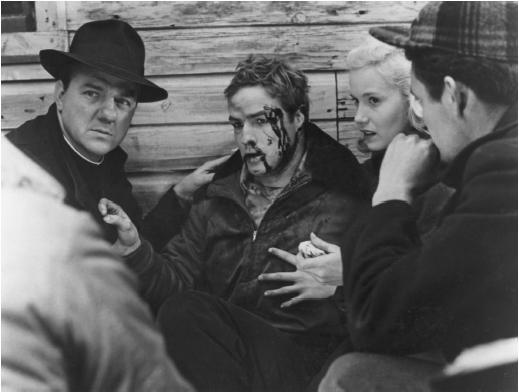
#9 Karl Malden in A Streetcar Named Desire
 I have a latent appreciation for Karl Malden, he’s – for the most part – a consistently good actor and it’s a shame that my two favourite performances of his often get thwarted in memory by their proximity to my two favourite Brando performances. In the wake of the hysteria happening in A Streetcar Named Desire the flash of gentility from [ ] is much appreciated. Malden already has that natural cadence that makes him perfect for the role, and he’s such a supporting actor. It’s easy to write him off, but it’s an Oscar well deserved.
 #8 Elizabeth Taylor in Cat On A Hot Tin Roof
 I often feel a little conflicted about Cat On A Hot Tin Roof, I love it for all its deviations and issues and Elizabeth is a significant part of that. From a literary perspective, I don’t see Maggie the Cat as iconic a character as most Tennessee lovers. Yet, Liz – more than the words on the page, I’d wager – turns it into that incessantly emotive, emotional, explicit and sensual woman that demands our attention.
 #7 Richard Burton in Night of the Iguana
 The casting of Richard Burton as the defrocked minister who may, or may not, be a drunkard is rich with irony. The performance is something brilliant. As fine as he is in Becket, the fact that Burton neither earned a win nor nomination for this fine performance is just one in a long line of Oscar injustices. Tonally, Night of the Iguana represents a departure from Tennessee at his most impetuous and Burton – who is so naturally conflicted, symbolises that latent unease perfectly. It’s, oddly, not as remembered as you’d think but that doesn’t mitigate its brilliance.
#6 Anna Magnani in The Rose Tattoo
 I’ll admit, I’ve actively prayed for Pedro Almodóvar to make an adaptation of this with Penelope Cruz and Javier Bardem, but that isn’t any suggestion that Anna Magnani isn’t powerful. I’ve never seen Magnani in an all Spanish production (I heard she’s masterful in her own language), but if this is her giving an average performance I’m floored. The Rose Tattoo – for me, is Tennessee’s forgotten classic**, and it’s unfortunate that the boorish, mis-casted Reynolds presents a potential blight to Magnani. She doesn’t allow that, though, delivering with intensity – a performance so raw I can’t bear to grudge her for beating out the competition. Ferocious.
 #5 Paul Newman in Sweet Bird of Youth
 I contemplated the logistics of a Tennessee Williams’ top ten without Newman’s work in Cat On a Hot Tin Roof – but as interesting a performance as his Brick is, I’m much more enamoured with his Chance. Chance manages to come off as one of Williams’ brutes who's not really that brutish and it's because Sweet Bird of Youth is - at its heart - not about human nature at its most violent, but at its most romantic. Romanticism seems to emerge naturally, even in the sordidness of that hotel room and a lot of that has to do with how much Newman seems made for the role of Chance Wayne.
#4 Katharine Hepburn in Suddenly, Last Summer
 Hepburn admitted to feeling the slightest discomfort at the macabre nature of character, and perhaps it’s this occasionally tentative characterisation of hers that makes me much more interested in Mrs. Venable on screen than I do on paper. Suddenly, Last Summer is such an odd film, I can only imagine how odd it must have seemed to the audience at the time. It’s should function as a trio of Monty/Elizabeth/Kate but it’s really Kate/Elizabeth...still, when Kate tackles those monologues – it’s just Kate (which is why I love the first half more than the second).
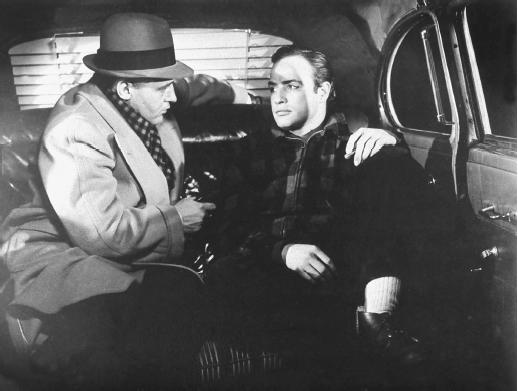
#3 Marlon Brando in A Streetcar Named Desire
 I’m an unapologetic Brando fan – even if I’m not that vociferous about it and though he doesn’t top the list, he is my favourite male performance from Tennessee. Forgive, but I’ll never think of Tennessee in tandem with men – his most interesting male remains Tom Wingfield, and I’ve yet to see a cinematic version of The Glass Menagerie. A Streetcar Named Desire is a puzzling piece, not least because it could have so many interpretations – sometimes Brando plays Stanley less as the ogre that some care to see him as, and more as a man trying to tend to the worn illusions of his own family.
 #2 Vivien Leigh in A Streetcar Named Desire

Someone once pointed out the irony of the very British Leigh representing two of the most iconic Southern-Belles, but it’s all part of the brilliance of acting. More than any of the players in the film, I’d say she gets better and better with age – I do wonder what Tandy did with the role, but it’s difficult imagining anyone else here – Vivien is so perfect. Yes, there's a slight inch preventing me from loving the performance uninhibitedly, but love/like it's a tour-de-force performance. Blanche may not have a strong grip on reality, but Vivien has a strong grip on Blanche and from her most lucid moments to her most heady Vivien delivers beautifully.
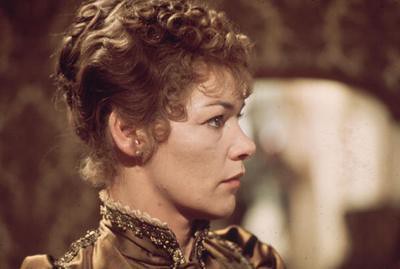
#1 Geraldine Page in Sweet Bird of Youth
 I’d like to think my citation of this performance here as an apology for so often forgetting Page’s work here. I so often forget about the film, actually, even if I consider it to be severely underrated (the film and the play). With her own set of neuroses, the Princess often gets forgotten when considered against the likes of Blanche, Amanda or Mrs. Venable but Page – so beautiful here – is just captivating. I hate she didn't win, but not as much as I’d like to (that 1962 line-up was pure brilliance). Most notably, though, Page avoids the most theatrical pitfalls that could occur in putting the Princess to screen. She’s just captivating to watch.
It takes more than a great role on paper to make a great performance, but there’s no doubt that each of these performances manages to be so brilliant because of their source material. Tennessee may not have written the screenplay for each film but the connection to his original plays is irrevocable. I like to think that his literature will always endure, I’m a literature student after all – and they’re all classics. I’d like to think that these ten performances will (continue to) endure, too. They’re classics as well.
* I’ve also seen two TV adaptations, the Jessica Lange version of A Streetcar Named Desire (an enchanting performance in its odd way) and the Arthur Kennedy version The Glass Menagerie. Unfortunately, I haven’t the version of the latter with our lady Kate the Great.
** When it comes to readability, I’d pick up The Rose Tattoo or Sweet Bird of Youth first. The former is one of the oddballs in Tennessee’s portfolio, not the least bit Southern, but it’s so quick and rewarding. On the issue of best, I’d debate between A Streetcar Named Desire, The Glass Menagerie and Night of the Iguana, though Sweet Bird of Youth retains a sentimental hold on me, but I’m never certain if it’s brilliant or if I love it too much.
This post is quite a mouthful, but as I said – I love Tennessee. Which of these performances inspired his genius endures most for you? Which inclusions surprise you? Do any of his plays emerge as a favourite of yours?